• A Q&A with Breanne Fahs
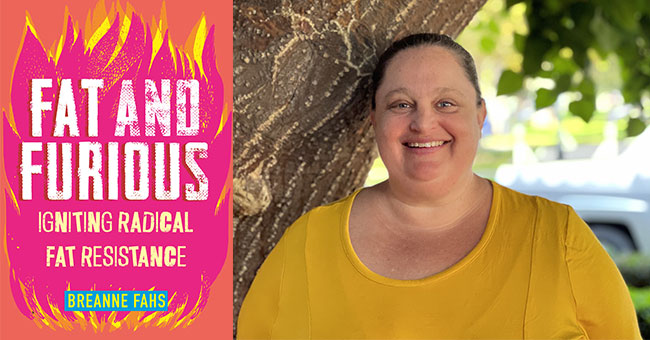
    Breanne Fahs and Fat and Furious

    Cover design: Carol Chu. Author photo: Eric Swank

    Anti-fatness and fat-shaming are used most often as a way to inspire fear in others about being or becoming fat. In Fat and Furious: Igniting Radical Fat Resistance, scholar and therapist Breanne Fahs breaks down how the dread of fatness is used to control and capitalize on women’s fears of their unruly bodies and demonstrates how rejecting shame and instead igniting feelings of anger can help us collectively move towards justice. Weaving together the voices of fat people and activists with damning psychological and sociological evidence, Fahs argues that rage, or fat fury, becomes the necessary antidote to the resignation and powerlessness that anti-fatness so often generates. We caught up with her for a two-part chat. This is part two of two. Read part one.

    Beacon Press: What are some of the ways that people, especially those who claim to support fat justice, find themselves unintentionally engaging in anti-fat beliefs and practices?

    Breanne Fahs: We’re all doing this in so many ways—big and small. There are so many interpersonal and interactive ways that this plays out. Complements about weight loss, making it clear that thinner is more desirable, parents “worrying” about their kids gaining weight (particularly in terms of securing a partner or making friends or being liked), clothes shopping discourses, restaurant discourses—and more!—are all areas where lots of anti-fat practices play out. We also have deeply held cultural beliefs about what fat people can do, what their bodies mean, and what they need.

    I recently did a review of news articles about Ozempic and Wegovy and found very, very few who ever bothered to interview fat people about their own bodies or experiences. We love to talk about fat people without talking to fat people. It is assumed that we know what the “fat experience” is without actually asking people.

    There are also ways that fat people feel they need to apologize for their bodies or see their bodies as a liability. That needs to change as well. And people encourage and feed that discourse all the time by imagining that fat people shouldn’t mention what they need, that they have to minimize their public relationship to food at work, with friends, etc., and more.

    BP: How does anti-fatness show up in our day-to-day lives? For example: healthcare, media, workplaces, education, etc.?

    BF: Anti-fatness is everywhere, like the air we breathe. There is a synergy to it. We don’t see fat people and so we don’t imagine them as having complex interior lives.

    Media excludes fatness, or derides it, or sees it as a project to “fix.” The majority of super-fat people on TV are treated like entertaining circus creatures, there to make thinner people feel superior and to make them feel horrified at fat bodies.

    Healthcare is a nightmare beyond words. Nearly every single fat person has faced discrimination, inappropriate comments, assumptions about their bodies, and this leads to all sorts of avoidance of medical care, screenings, and honest conversations about bodies. The insurance fiasco about weight loss drugs shows this even more acutely. We imagine fat people as a “mob” who will “destroy” Medicare if they all these drugs, and who fundamentally don’t deserve medications in the way that other populations clearly do. COVID and vaccination discourses showed this as well. Fat people were never treated as deserving of prioritized vaccines even when their health depended on them.

    Workplace discrimination is rampant, in hiring, firing, retention, promotion, and interpersonal exchanges.

    And educational anti-fatness is also rampant. Fewer and fewer fat people are going to college and getting graduate degrees. Teachers see fat studies in less positive terms.

    We can go on and on. And the problem is, most people hear these arguments and use them to justify more efforts to keep people from being fat! That’s not the answer. The answer is: How do we level the playing field so that fatter and thinner people have similar access to what they need and to building beautiful, complex, fulfilling lives?

    Capitalism is also a huge culprit in preventing that goal as well, but that’s for my next book . . .

    BP: Why do you center anger, specifically “fat fury,” as the emotional core of the book?

    BF: Anger is the turning of depression and suffering and sadness outward. In other words, instead of feeling despair and hopelessness, anger can motivate change, collectivize us, and it demands that we do better. Anger is an emotion that has powerful transformational potential, especially when harnessed as part of a social movement or an activist orientation. Anger is also a statement of refusal—refusal to internalize all of this garbage, refusal to believe and endorse anti-fatness, refusal to enact anti-fatness onto others. Anger is a beautiful, powerful emotion; fury is what we need in this political and cultural moment.

    BP: How can anger be transformed from a stigmatized emotion into a catalyst for collective action and change?

    BF: Anger is often seen as a destructive feeling, as something that destroys or harms others. I think that’s really missing the potential that anger has to transform us politically. When anger is experienced collectively, it works to undermine systems that are stubborn and problematic, and it does so from a place of righteous rage. Anger reminds us that we can refuse to subscribe to stories that don’t serve us. We can make something new, with anger at the helm. Anger paves new paths and makes us see things in new ways, especially when we do it together.

    BP: What can we learn from radical fat activists featured in this book that might help us shift how we think about resistance and justice?

    BF: Radical fat activists are, and have been, paving the way for us for a long time. They were early to identify fatness not as an individual “problem” but as something that deserves space to exist and to thrive. Radical fat activists have refused to be satisfied with “within-system” limited solutions like “loving your body” and have instead demanded that we look deeper into the roots of anti-fatness to the spaces where anti-fatness joins with racism, sexism, ageism, ableism, capitalism, and more. Radical analysis doesn’t mean “extreme”; it means going to the root of something to understand it at its core or root. Radical fat activists ask us to think more deeply about how the hatred of fatness is powerfully connected to misogyny and anti-Blackness, for example, among other things. And radical fat activists understand that fun, play, anger, celebration, collective despair, and outright fury all matter in creating a better world for fat people and for everyone else, too!

    BP: How can thin/straight-sized people engage meaningfully in fat resistance without centering themselves?

    BF: Thinner people can work to recognize when they’re doing harm to themselves and others and they can work to better understand the more root structures of anti-fatness. They will inevitably find parts of their own identity there at the root, too (women, people of color, queer people, etc.). The roots of one oppression are often shared with others’ oppressions.

    We need to be in solidarity with each other, now and always. It is the only way forward. Just because we don’t live in the same body or same type of body, just because we don’t have the same identities in no way means we can’t fight against each other’s oppressions. What I feel about thinner people is: If your fight aligns with my fight, however imagined, we are allies for each other. We are in solidarity. I want thinner people to be better at truly being in solidarity with fat people and in fighting to make room for all kinds of bodies and all kinds of feelings about bodies. I also think that fat resistance makes sense on as large a scale as possible. We need all hands on deck!

    BP: What do you hope readers will do differently after reading Fat and Furious?

    BF: I hope readers will feel furious! I hope they will better understand how actually bad things are in terms of how we treat fat people and what they deal with. I also want them to see fury and collectivism and social movements and righteous rage as a way forward. I want readers to learn from fat activists and see them as guides for the struggles of the future. Mostly, I want readers to invest themselves with the identity of activist, ally, and fellow traveler. When fat people live in a more just world, we all benefit.


    About the Author 

    Breanne Fahs is professor of women and gender studies at Arizona State University, where she specializes in studying women’s sexuality, critical embodiment studies, feminist histories, and political activism. She has authored many books, including most recently UnshavedBurn It Down! Feminist Manifestos for the Revolution, and Fat and Furious. She is the founder and director of the Feminist Research on Gender and Sexuality Group at Arizona State University, and she also works as a clinical psychologist in private practice.
  • A Q&A with Breanne Fahs

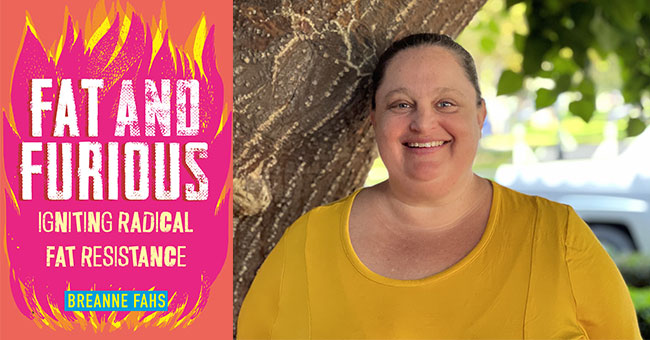
    Breanne Fahs and Fat and Furious

    Cover design: Carol Chu. Author photo: Eric Swank

    Anti-fatness and fat-shaming are used most often as a way to inspire fear in others about being or becoming fat. In Fat and Furious: Igniting Radical Fat Resistance, scholar and therapist Breanne Fahs breaks down how the dread of fatness is used to control and capitalize on women’s fears of their unruly bodies and demonstrates how rejecting shame and instead igniting feelings of anger can help us collectively move towards justice. Weaving together the voices of fat people and activists with damning psychological and sociological evidence, Fahs argues that rage, or fat fury, becomes the necessary antidote to the resignation and powerlessness that anti-fatness so often generates. We caught up with her for a two-part chat. This is part one of two. Read part two.

    Beacon Press: What led you to write Fat and Furious?

    Breanne Fahs: I had become distressed about the ratio of voices who were claiming that fat people should simply “love their bodies” compared to those who were talking more honestly about the complex feelings people have about their bodies. In particular, I always think that intrapsychic experiences collide with social and cultural experiences and stories, and fatness is particularly vulnerable to this. I have been particularly interested in what anger and rage look like when directed away from the self and toward those social and cultural stories that continue to oppress fat bodies and fat people. It’s easy to simply feel distress about one’s own body, but that doesn’t typically end there. We need to look at the larger stories of collective fury that fat people can cultivate. This book is an effort to both look at how bad things can be, but also what can be done about it, especially collectively, and especially harnessing the power of fury.

    BP: Who is the book for? What type of readers will most benefit from the book’s message?

    BF: This book is for so many different people. I want this book to speak to those who feel irritated and angry and upset about the way fat people are treated—either as allies or as fat people themselves—and who want a better language for why they feel that way and what to do about it. I hope this book can reach younger people, activists and budding activists, people who are tired of being treated poorly (and tired of watching others being treated poorly) for their weight. Fat people who have lived many of these things but who too often feel shame. Feminists and other politically progressive folks who want to “do better” about the topic of size and fatness. Parents who are struggling with how to think about their own body image and their kids’ body image issues. And more. I think it will benefit those who are angry but don’t know where to direct their anger or how to link it to a long history of other fat people and fat activists who are also angry.

    BP: How does your background as a therapist inform the book?

    BF: My therapy practice really prioritizes the collision between the individual/intrapsychic and the social/cultural. What happens to us individually—distress, suffering, sadness, anxiety, trauma, and more—connects quite deeply to bigger stories about gender, race, class, sexuality, size, age, and disability, among others. I think a lot with my clients about how to understand themselves within the (highly distressing) contexts in which they live. I’m working to bring that same energy to this book, particularly because fatness, and the suffering around fatness, is often experienced as intensely lonely and individualized. I want these feelings to instead become collectivized, at least to a point, and for people to feel that they are part of a bigger movement to make change within themselves and the world.

    BP: What does “fat justice” mean, and why are the stakes so high for achieving it?

    BF: Fat justice really centers on the idea that fat people deserve so many things they are currently often denied: access to rights; dignity; medical care; full and diverse lives; love and care from others; the ability to move through the world both literally and metaphorically; and more. Fat justice is about thinking about the fat body as a political body, as a body dialed into many experiences where power is at play. We can and must do better with fatness, particularly as we unpack the fear of fatness, the fear of becoming fat (or fatter), and all of the ways in which that terror governs us in unspeakably unjust ways.

    BP: In what ways is anti-fatness more than just cultural bias? How has it been institutionalized and politicized?

    BF: It’s an even more powerful cultural bias because it gets disguised as an individual experience. We think of it all too often as something individual people feel or think about with regard to their own bodies, but we far less often think about how ideas about fatness are informed by much bigger and more intense stories in the social and cultural spheres.

    Sexism is seriously at play, particularly when we imagine the need for women to take up less space. Racism is seriously at play, particularly when we think about bigness as linked to Blackness and then denigrate it. Homophobia and heterosexism are at play, particularly when we think about fatness as an avenue for women to gain men’s approval, and so on. Ageism and ableism are at play, when we fantasize about an ever-more-narrow idea about “good” and “proper” and “sexual” and “lovable” bodies—all of which are quite thin. All of these ideologies get institutionalized through policy, representation, social and educational narratives, and more. Even at the material level, anti-fatness is institutionalized; it is harder to move through the world as a fat person, mostly because the world has decided not to accommodate fat bodies. Much like disability, fatness is seen as “othered” or “outside” of the norm, even when this is hardly the case.

    BP: What are the consequences of having no legal protections for fat people in most institutions?

    BF: Fat people can be fired or discriminated against without hesitation. They can be refused good medical care or seen as non-compliant or “difficult.” They have fewer avenues to legally challenge discrimination. We are in a period of time I hope we look back on with horror, where we basically allow fat people to be seen as “inferior” and for institutions to coalesce around this idea, thereby preventing fat people from accessing basic legal protections and equality.

    BP: What are the limitations of mainstream body positivity movements?  Or how has the body positivity movement been co-opted and why is it failing fat people?

    BF: The body positivity movement certainly has a role in challenging anti-fatness. It’s good for people to think critically about why they dislike their bodies and to seek out ways to feel better about their bodies. I support that. That said, the story can’t end there.

    It’s not enough for you or me to simply like our bodies. That’s not really about justice and systemic change. It’s also incredibly vulnerable to capitalism and corporate control of our bodies. There’s an easy slippery slope toward “buy this and you’ll feel better about your body.” Without a larger analysis of why we, especially women, hate their bodies so much and fear fatness so much, we lose the larger critique of sexism, racism, capitalism, and more. We need to think more about challenging anti-fatness in collective ways that aren’t as vulnerable to “shopping-as-cure,” which capitalism is happy to offer us all the time.


    Read part two!


    About the Author 

    Breanne Fahs is professor of women and gender studies at Arizona State University, where she specializes in studying women’s sexuality, critical embodiment studies, feminist histories, and political activism. She has authored many books, including most recently Unshaved, Burn It Down! Feminist Manifestos for the Revolution, and Fat and Furious. She is the founder and director of the Feminist Research on Gender and Sexuality Group at Arizona State University, and she also works as a clinical psychologist in private practice.

  • A Q&A with Margaret Grace Myers

    Margaret Grace Myers and The Fight for Sex Ed

    Author photo: Matthew Cohen. Cover design: Louis Roe

    The US has some of the highest rates of STIs and teen pregnancies in the industrialized world. A comprehensive sex education curriculum—which teaches facts on contraception, prophylactics, consent, and STIs—has been available since the 1990s. Yet the majority of states require that sex education stress abstinence, and twenty-two states do not require sex ed in public schools at all.

    In The Fight for Sex Ed: The Century-Long Battle Between Truth and Doctrine, writer, advocate, and historian Margaret Grace Myers shows us how we got here. While the earliest calls for sex ed came from a coalition of religious leaders and doctors at the turn of the century who sought to control the prevalence of STIs, the advent of antibiotics and modern condoms meant that abstinence was no longer good public health policy. The religious right, however, continued to frame it as such, using its impressive machinery to replace scientific facts with conservative Christian values. Myers also shows how the religious right has worked to narrow the discourse around sex ed, decade after decade, often dictating the terms of debate almost entirely. We caught up with her to have a two-part chat about her book. This is part two of two. Read part one

    Beacon Press: You write that sex ed is about much more than biology. How does it connect to broader issues like gender equality and reproductive justice?

    Margaret Grace Myers: This is another question that has a much more nuanced answer than it might seem.

    Sex ed, from the very beginning, has always had to push back against this idea that it was teaching “just the facts.” This was one of the things that early critics, along with contemporary critics, were extremely concerned about—that students were being taught “raw facts” without the “correct” moral context. In fact, it is one of the foundational tenets of sex ed—of all versions of sex ed—that there is always a moral context. In all of the research I did for this book, I never once found a curriculum or teacher who claimed to be teaching “just the facts.” 

    Until the late 1960s, this context was typically Christian morality. Sex education was taught with the understanding that young people were being instructed not only in the biological facts of sex, but in how to be in the world as a sexual person (though that wouldn’t have been the phrasing!) within a “moral” context. Very often, this was overtly Christian, and sometimes more veiled. It is why we so often see sex ed as part of home economics classes, why some people may remember pretending to get married as a part of a high school assignment. It was all part of this holistic approach to sex ed, sometimes under the class named “family life education,” that talked about relationships and self-image and hygiene.

    Then came the late 1960s, when it seemed like almost all parts of American life were being re-evaluated. This is when we really see cracks forming between what would become abstinence-only sex ed, which would uphold those Christian values, and comprehensive sex ed, which would come to think much differently about how sex ed could be used.

    Comprehensive sex ed, which by definition is evidenced based and medically accurate, also teaches about healthy relationships, gender, and sexuality. The outcomes from CSE programs are really remarkable, and have been proven to increase inclusivity, decrease intimate partner violence, and promote healthy relationships in addition to showing lower rates of STIs and pregnancies among teens. Abstinence-only sex ed does not show the same outcomes.

    BP: How have parents, educators, and students successfully pushed back against restrictive sex ed policies in the past? And what is happening on the ground today?

    MGM: Both the people who have fought for and against the most restrictive policies and “won” have one thing in common: perseverance. Throughout researching this book, I was amazed by the people on both sides who just continued to show up wherever the fight was happening, day after day, week after week, and sometimes year after year. 

    These fights can go on for years. In Louisiana, sex ed was de facto banned for a decade. One lawmaker, state Representative Alphonse Jackson, introduced bills repealing the ban for years in a row. He was mocked in the press, but he just kept coming back. It was amazing.

    What I think people who care about restrictive sex ed policies and want to push back against them can really learn from those who have enacted those policies, is that mucking up the system, not doing things elegantly, and not letting it go is often really the way that things get changed. In the book, I mention one school board meeting that was 13.5 hours long. Yes, 13.5, from 8AM to 9:30PM. People showed up because they cared and they did not let it go.

    I lost track of how many school boards seemed to capitulate to angry parents who complained about the very idea of sex ed, regardless of how well planned, vetted, and researched the curriculum was. The protesters in these cases were almost uniformly against what they thought of as “too permissive” sex ed, and very rarely—although sometimes!—did I see the same fight against abstinence-only sex ed.

    BP: For people who care about improving sex ed in their communities but feel overwhelmed, where can they start?

    MGM: Related to the last question, the best thing that a person can do is educate themselves about what sex ed looks like in their community. Are there state guidelines? District guidelines? Does the school down the street teach sex ed, or health, or something else? What curriculum do they use? Sometimes this information will be easier to find than others.

    School board elections and school board meetings are also key. Of course, having the time and energy to research and attend these meetings, etc., is often in short supply, which is another reason why abstinence-only sex ed has gotten as far as it has! 

    But, if possible, I really encourage making it your business to learn, and to care. Even if someone is not a parent or student themselves, it is a matter of public health—and the public good!—to find out and to advocate for comprehensive sex ed. 

    BP: What do you hope readers take away from your book?

    MGM: First and foremost, I really hope that readers are able to look at sex ed a little more clearly. It’s something I had very little sense of before I started the project, and of course, now I see it everywhere. I see the very present and real impact that it has on young people truly every day. 

    If it sparks action, that’s even better. I also think it reveals some genuinely interesting aspects of American history that hadn’t quite become real to me, which I hope will speak to readers. 


    Margaret Grace Myers is a writer, an educator, and a book collector based in Maine. Her writing has appeared in The CutLady Science, and the Gotham Gazette, among other publications. She holds an MFA in nonfiction writing from Goucher College and a master’s degree in theological studies from Harvard Divinity School. She is the author of The Fight for Sex Ed.

  • A Q&A with Margaret Grace Myers

    Margaret Grace Myers and The Fight for Sex Ed

    Author photo: Matthew Cohen. Cover design: Louis Roe

    The US has some of the highest rates of STIs and teen pregnancies in the industrialized world. A comprehensive sex education curriculum—which teaches facts on contraception, prophylactics, consent, and STIs—has been available since the 1990s. Yet the majority of states require that sex education stress abstinence, and twenty-two states do not require sex ed in public schools at all.

    In The Fight for Sex Ed: The Century-Long Battle Between Truth and Doctrine, writer, advocate, and historian Margaret Grace Myers shows us how we got here. While the earliest calls for sex ed came from a coalition of religious leaders and doctors at the turn of the century who sought to control the prevalence of STIs, the advent of antibiotics and modern condoms meant that abstinence was no longer good public health policy. The religious right, however, continued to frame it as such, using its impressive machinery to replace scientific facts with conservative Christian values. Myers also shows how the religious right has worked to narrow the discourse around sex ed, decade after decade, often dictating the terms of debate almost entirely. We caught up with her to have a two-part chat about her book. This is part one of two.

    Beacon Press: What inspired you to write The Fight for Sex Ed?

    Margaret Grace Myers: I really fell into the topic of the history of sex ed in the United States while doing research about my great grandparents, who were both biologists at the turn of the twentieth century in Baltimore. They were casually involved in the social hygiene movement, which was a public health effort that tied together morality and medicine in an attempt to curb STIs, and where we really see the beginning of modern sex ed in the United States. From reading those early accounts of meetings and literature, I was struck by the fact that the debates seemed very similar to questions I had heard in my own life about how, what, when, and where to teach young people about sex. That was the seed of the book. 

    BP: Many people assume sex ed has improved over time. What surprised you most in researching its history?

    MGM: I was first surprised, and then quickly frustrated and then almost amused—as I write about a bit in the book itself—by how many patterns repeat in the history of the subject. I write about a sense of cultural amnesia—how there will be really strong ideas for implementing sex ed, a strong plan for it, then debates, then protests, then pushback, then things calm down—and then a decade or so later, the whole thing starts up again. It’s not always so linear or on a specific timeline, but the pattern is there and it’s dizzying. And the protest/debate/pushback is almost never about a specific topic. Not really. It’s just much more about the idea of sex ed, with different topics functioning as the bogeyman of the day. 

    That was most surprising on a narrative level, but on a content level, I was really surprised by the utter vitriol the religious right had for the subject during the late 1960s, especially 1968 and 1969. There were books, pamphlets, radio shows . . . the John Birch Society had a secondary group specifically dedicated to fighting sex ed. Several states banned the subject, with Louisiana functionally banning it for an entire decade from 1961 to 1971.

    BP: Why is sex education in the US still so inconsistent and controversial, despite decades of public health data that would support its implementation?

    MGM: Because of the way the religious right—which is an imperfect term, but the one I use to refer to Christian conservative political movements—has worked tirelessly to portray it as being inconsistent and ineffective; and because those political machinations have been so powerful on the national, state, and local levels; and because of the deep held belief that many have that any knowledge of sex is bad or dangerous or not appropriate for young people; and because sex ed is not mandated or overseen on a national level. It really is a perfect storm.

    BP: What are some of the most common myths or misconceptions people have about sex ed in schools?

    MGM: One of the most important things to understand is that not all sex ed is created equal, and that is because there are two main schools of thought around sex ed that have wildly different goals, which leads to wildly different content. So, a high school junior in New Hampshire and a high school junior in Alabama could both say they took, for example, a calculus class. While they may not have learned from the exact same textbook and done the exact same problems, in theory, the classes should have covered the same content. Same even for a course like English. Even if students across the country didn’t read the same books or were assigned the same essays, the goal, ideally, was to read, write, and think. 

    With sex ed, on the other hand, a young person in one state could receive comprehensive sex ed (CSE) that is evidence based, medically accurate, age appropriate, and inclusive. A young person in another state could receive abstinence-only or “sexual risk avoidance” “sex ed” that is shame based, biased, does not give information about contraception, and isn’t inclusive. Both of these young people may technically have been taught “sex ed,” but in this example, they are actually philosophically diametrically opposed and could contain almost none of the same material.

    This makes it extremely hard to talk about “sex ed” in general, and so this underlying tension really has to be understood before any work can be done in improving sex ed in schools.

    BP: How did the religious right become so influential in shaping sex ed policy across the country?

    MGM: This is such a complicated question, and there isn’t an easy answer. I think there are a few different big points.

    The first is that the early concepts of sex ed, found in social hygiene circles, were really born of a partnership between medicine and what was thought of broadly as “morals,” which in the early 1900s among “proper society” often just translated to a bland sort of Protestantism. And so within that, there was this strongly held belief that the problem of “the social evil,” (which social hygienists were trying to cure) which included sexually transmitted infections, was solved by both medicine and morals and that that advice was actually the same: don’t have sex until you get married; get married young; and then only have sex with that person. So, there was and is some ownership over the idea of sex ed from “Christianity” in a broad sense. 

    But as the century proceeded and medicine and science began to offer different solutions, prevention, and treatment, a gulf began to form. Then there are all those whims and moments of history that I can’t enumerate or attempt to establish strong causal relationships between, but the mid-1960s were such a tumultuous time in our country in so many areas. And then, by the late 1960s, I do think for the Christian hegemony, which had spent many decades feeling really unchallenged, everything appeared to be a threat. We see this on a lot of levels in areas I am not an expert in—but race, economics, etc., and certainly in sexual politics. And sex ed, which was also progressing as its own field of study, now with the backdrop of a new morality, became a target by what was emerging as “the religious right.”

    Then, through varied political actions (local, state, and national laws, lawsuits, etc.), that machine of the religious right weakened and demonized good and comprehensive sex ed and strengthened the appearance of abstinence-only sex ed. It was really a very good scheme and allowed states to fulfill mandates for “sex education” while really just providing abstinence instruction. And it was done relatively quietly, so many people really just don’t know that this is the situation.


    Read part two.


    About the Author 

    Margaret Grace Myers is a writer, an educator, and a book collector based in Maine. Her writing has appeared in The CutLady Science, and the Gotham Gazette, among other publications. She holds an MFA in nonfiction writing from Goucher College and a master’s degree in theological studies from Harvard Divinity School. She is the author of The Fight for Sex Ed.

  • By Christian Coleman

    Beach reading

    Image credit: Pexels

    Finishing eight or nine? Tell us: What’s the perfect time? We told you we’ll be waiting, hiding from the rainfall. And tell us: What’s the joy of giving if you’re never pleased? On our last strength against you, babes, tell us what you, as titles from our catalog, need. Oh, you need us to read you? Till the end of summer? Yeah, you got it, babes, cover to cover! We’ll never let you go.


    Art Above Everything

    Art Above Everything: One Woman’s Global Exploration of the Joys and Torments of a Creative Life

    “It is precisely this ability—creating life out of paint, out of notes, out of clay—that inspires us to become artists in the first place. Once we fully grasp the infinity of hours that must be sacrificed to achieve our vision, most of us quit. The rest must somehow steel themselves against the rejections, the loan sharks, the meniscus tears, and the despair to follow. Will this be worth it, in the end?
    —Stephanie Elizondo Griest 


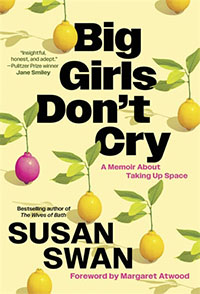
    Big Girls Don't Cry

    Big Girls Don’t Cry: A Memoir About Taking Up Space

    “But everyone takes up space as they travel through their lives. Taking up space is how most of us learn who we are and what makes us happy. This is especially true for women, who are often taught to be smaller than their brothers and the boys they know, and, later on, smaller than their partners, or their husbands, or their colleagues. And if they become mothers, they may be expected to step aside and cede space to their children.”
    —Susan Swan


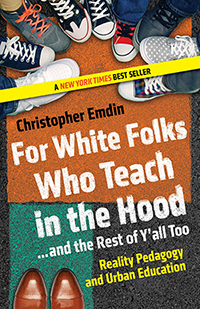
    For White Folks Who Teach in the Hood

    For White Folks Who Teach in the Hood: Reality Pedagogy and Urban Education

    “In schools, urban youth are expected to leave their day-to-day experiences and emotions at the door and assimilate into the culture of schools. This process of personal repression is in itself traumatic and directly impacts what happens in the classroom. Students exist in a space within the classroom while the teacher limits their understanding to what is happening in the classroom place. Failure to prepare teachers to appreciate the psychic spaces students occupy inevitably limits their effectiveness. Some teachers understand that students come from places beyond the classroom and can acknowledge that these places have an effect on students and the spaces they occupy. However, many teachers cannot see beyond their immediate location (the school) and therefore have a very limited understanding of space.”
    —Christopher Emdin


    Mean Little deaf Queer

    Mean Little deaf Queer: A Memoir

    “We were both smiling in exactly the same way, as if we were about to break into song, although it’s a good thing we didn’t, since neither of us can sing on key. I introduced myself and invited her to a party that was being held to welcome me back to Austin. I got a bit flustered and asked her to call me. I gave her the number of the house where I was staying with Isabelle, her lover Beatrice, and Isabelle’s sister Vivian, all of whom were from the same region in southern France, two of whom still had outrageously magnificent French accents. When I told Donna to call me I said, ‘By the way, I’m deaf so I won’t actually hear you when you call. The friends I’m staying with translate for me. They’re French.’ Which confused Donna mightily. She wasn’t sure if that meant they would be speaking French if she called me or if they would translate her English into French for me to understand. But she felt it impolite to probe.”
    —Terry Galloway


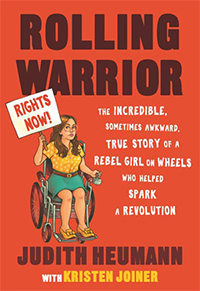
    Rolling Warrior

    Rolling Warrior: The Incredible, Sometimes Awkward, True Story of a Rebel Girl on Wheels Who Helped Spark a Revolution

    “We lived on one of those streets where there were tons of kids and everyone knows each other. I was the only kid in a wheelchair, but this meant literally nothing to us. We were little and we just figured things out, like you do when you’re little. If everyone was roller skating, we put roller skates over my shoes and I skated in my chair. If everyone was jumping rope, I turned the rope for the kids who were jumping. We didn’t even think about it. Me being in a wheelchair just felt like me having straight hair when Mary had curly. Sometimes I think kids are so much smarter than adults.”
    —Judith Heumann with Kristen Joiner 


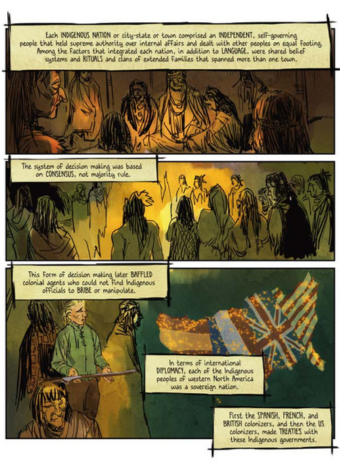
    Roxanne Dunbar-Ortiz IPHUSRoxanne Dunbar-Ortiz’s Indigenous Peoples’ History of the United States

    IPHUS excerpt—Paul Peart-Smith 


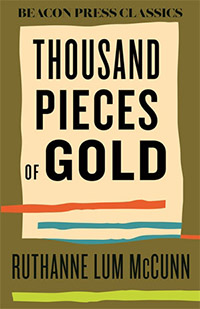
    Thousand Pieces of Gold - BPC

    Thousand Pieces of Gold

    “From the time Lalu had learned to walk, she had worked: first, following her father’s plow and dropping soy beans into the furrows; later, when her father planted the sweet potato vines, filling the holes with water, covering all but one leaf with soil; then, during the harvests, cleaning sweet potatoes for her mother to slice and dry, and picking peanuts off the vines. Even during the two years of foot-binding, when she could not walk, she had not been idle, learning to sew and spin and weave. And after her feet became little four-inch lotus, when she was no longer allowed to work in the fields, she had helped her mother at home. Except for the harvests. Then she and her mother joined the other women and girls, threshing wheat and millet, picking peanuts, and preparing sweet potatoes, turnips, cabbages, and other vegetables for storage. She had thought working as her father’s laborer would be no harder. She had found she was wrong.”
    —Ruthanne Lum McCunn


    The Unicorn Woman

    The Unicorn Woman

    “I drive around the colored section looking for a restaurant where I can buy some ham sandwiches, cake, and coffee to take on the road. I never like to stop at roadside cafes, even the ones that say “take-out service,” which is a signal to colored people that they can stop, buy their food, and get going. Sometimes they can come in the front way; other times they have to come to the back door. You never know what the locals will do when you’re traveling through these wastelands. I always keep a guide with me that my father gave me a copy of, written by people who’ve traveled these badlands before me, although I don’t like to travel further south than Tennessee or further west than Indiana.”
    —Gayl Jones


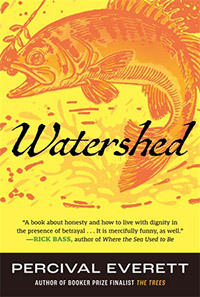
    Watershed

    Watershed

    “The lie was a great big fat one and I had more than a little sinking feeling. What was worse was that I did not know why I had lied. I had no real reason to suspect that Louise Yellow Calf was involved in the deaths of the two FBI agents, but things were not clear with her. In fact, I did have some idea why I had lied, although knowledge of a feeling doesn’t make it rational. I recognized that I was almost pathologically incapable of imparting anything but basic information to the FBI. Had she been asking me if I had seen the purse snatcher run past me on the street I might have answered her truthfully, but the whole feel of this thing was muddled and dicey.”
    —Percival Everett


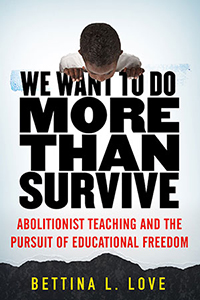
    We Want to Do More Than Survive

    We Want to Do More Than Survive: Abolitionist Teaching and the Pursuit of Educational Freedom

    “Whiteness cannot enter spaces focused on abolitionist teaching. Whiteness is addicted to centering itself, addicted to attention, and making everyone feel guilty for working toward its elimination. Whiteness will never allow true solidarity to take place. Those who cling to their Whiteness cannot participate in abolitionist teaching because they are a distraction, are unproductive, and will undermine freedom at every step, sometimes in the name of social justice.”
    —Bettina L. Love

    Beach reading


    About the Author 

    Christian Coleman is the digital marketing manager at Beacon Press and editor of Beacon Broadside. Before joining Beacon, he worked in writing, copy editing, and marketing positions at Sustainable Silicon Valley and Trikone. He graduated from Boston College and the Clarion Science Fiction & Fantasy Writers’ Workshop. Follow him on Twitter at @coleman_II and on Bluesky at @colemanthe2nd.bsky.social

  • By Andreas Karelas

    Pope Francis at Varginha in southwest Minas Gerais state, Brazil during WYD, 2013. Photo credit: Agência Brasil

    Pope Francis at Varginha in southwest Minas Gerais state, Brazil during WYD, 2013. Photo credit: Agência Brasil

    Editor’s Note: When Pope Francis died on April 21, 2025, we lost another environmental justice champion. He called for decisive action to guard against the climate crisis and condemned climate crisis denial in his encyclical on the environment, Laudato Si’. He also framed climate change as a moral issue for Christians to take to heart. This is, after all, the only planet we have. In this passage from Climate Courage: How Tackling Climate Change Can Build Community, Transform the Economy, and Bridge the Political Divide in America, Andreas Karelas explores what prompted such a strong stance from the pope.

    ***

    In 2015 Pope Francis released a papal encyclical—an urgent message addressed to all Catholics—entitled Laudato Si’ [Praise Be to You]: On Care for Our Common Home. It caught the attention of people around the world because in it, the pope decried climate change, especially its effects on the poor. It was quickly dubbed The Encyclical on Climate Change and Inequality.

    A papal encyclical is rare and therefore significant. Encyclicals are written when a pope feels a pressing need to clarify the Catholic Church’s teachings on a given subject: “They deal with complex social and moral issues and back up their claims with reference to the Bible and to Catholic tradition and doctrines.” Laudato Si’ was the first encyclical that directly addressed the environment and sustainability. The message Pope Francis sent to the 1.2 billion Catholics around the world by way of the Laudato Si’ is loud and clear: climate change is real, caused by humans, and we have to do something about it. But the encyclical also makes clear how one’s identity as a Christian relates to climate change: “The ecological crisis is also a summons to profound interior conversion. . . . Living our vocation to be protectors of God’s handiwork is essential to a life of virtue; it is not an optional or a secondary aspect of our Christian experience.”

    What prompted this strong stance from the pope? To understand, it helps to have a sense of Pope Francis’s story. Born Jorge Mario Bergoglio in 1936, Pope Francis grew up in Argentina during tumultuous times. He saw firsthand the ills of inequality in a country where the wealthy lived in a bubble while many others lived in abject poverty. Jesuit priests, in the tradition of Saint Francis, are tasked with going to the frontier of poverty. Pope Francis, throughout his priesthood, would spend his time in the most impoverished neighborhoods of Buenos Aires serving and ministering to the poor. As a bishop, he never had a car, and he wouldn’t accept a ride. He always wanted to walk the streets or to take the subway or the bus. In the neighborhoods and on public transportation he talked with people and learned about their struggles. They referred to him as the Priest of the Villas and the Priest of the Slums. Even now as the pope, he chooses not to live in the papal residence but rather in the guest house, so he can live a more humble, simple life.

    It’s no wonder, to me at least, that this pope, who is known for walking the streets and washing the feet of the poor, has used his seat of authority to call the world’s attention to climate change, which will disproportionately affect the poor. The pope describes the correlation this way in the encyclical:

    We are faced not with two separate crises, one environmental and the other social, but rather with one complex crisis which is both social and environmental. Strategies for a solution demand an integrated approach to combating poverty, restoring dignity to the excluded and at the same time protecting nature.

    One doesn’t have to be Catholic to find truth in that statement, nor in this:

    If we approach nature and the environment without . . . openness to awe and wonder, if we no longer speak the language of fraternity and beauty in our relationship with the world, our attitude will be that of masters, consumers, ruthless exploiters, unable to set limits on their immediate needs. By contrast, if we feel intimately united with all that exists, then sobriety and care will well up spontaneously.

    Wow.

    I remember when the encyclical came out. It was free online, and I printed it out and carried it around with me, reading from it every chance I could get. A few weeks later, I had a meeting with former head of the EPA under George H. W. Bush, Bill Reilly. Bill is a fascinating guy. He’s a staunch Republican and yet a passionate environmentalist. It was largely because of him that President Bush supported environmental efforts like the Montreal Protocol, which limited ozone-depleting chemicals, and signed the United Nations Framework Convention on Climate Change at the Rio Earth Summit in 1992.

    When I met with him, Bill had just come back from meeting with the pope. He showed me pictures and told a few stories. Bill was of the belief that the encyclical would have a tremendous impact on shifting Republican views on climate change. He told me to start carrying around a copy of it. I took out the copy I had in my bag, and we had a laugh.

    Pope Francis used his pulpit to call to the attention of his spiritual followers the serious threat of climate change. Thankfully, he wasn’t the first. 


    About the Author 

    Andreas Karelas is the founder and executive director of RE-volv, a nonprofit organization that empowers people around the country to help nonprofits in their communities go solar and raise awareness about the benefits of clean energy. He is a dedicated clean-energy advocate with over 15 years of environmental and renewable energy experience. He is an Audubon TogetherGreen Conservation Leadership Fellow and an OpenIDEO Climate Innovator Fellow. He lives and works in San Francisco. Connect with him at re-volv.org.

  • Open book and sky by Kranich17

    Image credit: Kranich17

    The way you got us all in our head, we think we’d rather you in bed. Whatever it is, you know we can take it. We’re counting the days. How many days till we can see you again? Wait. Are we talking about the summer or books or . . . ? Anyway, here’s what we’ve been reading, watching, and listening to this season.

    From Marcy Barnes, Production Director

    Actress of a Certain Age

    I just finished Jeff Hiller’s memoir, Actress of a Certain Age. It is as delightful and heartfelt as you’d imagine, and Hiller is more revealing and vulnerable than I’d expected. I got a signed copy preorder through The Strand and accidentally spilled mushroom gravy on it when I was visiting Savannah (this Northern gal is a newb to biscuits and gravy). At first, I was disheartened, but I think Hiller would approve somehow of my “French toast for the table” energy (yes, a nod to the actor’s most notable role thus far in Somebody Somewhere). You’ll laugh; you’ll cry; you’ll hear Hiller's unmistakable voice in every word.


    From Perpetua Cannistraro, Publicist

    Ironheart

    Watching: Ironheart, streaming on Disney+. The latest entry in the Marvel TV lineup, Ironheart is a great (and too-short!) reflection on the lengths we're willing to go to fill ~the emptiness~ within us. The show’s soundtrack is also 🔥.


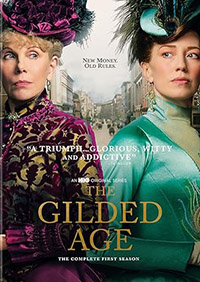
    The Gilded Age

    Watching: Season three of The Gilded Age, airing Sundays at nine on HBO and HBO Max. The show is lush, dramatic eye candy that you’ll find fun to watch if you enjoyed Downton Abbey, which I’ve never seen, or any other “upstairs/downstairs” drama. I’ve been fascinated by the sociopolitical dynamics of this era in American history since elementary school. Watching the show in 2025 is so interesting to me, given the parallels I see between Gilded Age society and today.


    Sex with a Brain Injury

    Reading: Sex with a Brain Injury by Annie Liontas, narrated by Natalie Naudus. I suffered a mild TBI this winter, which has led to some lasting symptoms that may take more than a few more months to heal. A media colleague recommended this book to me; so far, it affirms my experience and makes me grateful for the progress I’m making in my recovery.


    From Carol Chu, Executive Creative Director 

    The-Bald-and-the-Beautiful

    I’m listening to The Bald and the Beautiful podcast with Trixie and Katya nonstop.


    The Master and the Margarita

    I’m working my way through The Master and Magarita by Mikhail Bulgakov. When I’m in the thick of it, I love it, and when I put it down, I’m left thinking, “What was that?!”

    And I’m not watching much (not really any, actually) but enjoy the weekly Never Too Small videos on YouTube and binge the week’s posts on Saturday mornings.


    From Christian Coleman, Digital Marketing Manger 

    All Systems Red_Murderbot Diaries

    Surprise! I’m not reading horror this season. Back to science fiction. With all the attention the AppleTV+ Murderbot series is getting, especially now that a second season has been secured, I decided to conjure my own imaging of the human-averse security cyborg by reading Martha Wells’s Murderbot Diaries. There’s something very vindicating about reading about a cyborg getting exasperated with petty humanness. I’m on the fourth novella of the series and wonder what Murderbot would think of today’s corporate hard sell of ChatGPT and the glut of AI slop. Although Murderbot would rather do without humans, it admits in the second novella, Artificial Condition, that humans are necessary—at least for producing the series it binges while avoiding security detail. How would it, a SecUnit, feel about consuming AI slop regurgitated by a MediaUnit? Or a ContentUnit?


    We're Here

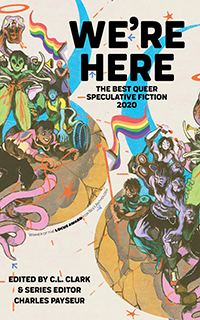
    I am so out of practice reading short stories. I have been hyper-focused on novels and novellas—see above—that I figured it was time to get back in the short-fiction saddle. I’m halfway through We’re Here: The Best Queer Speculative Fiction 2020, edited by C. L. Clark and Charles Payseur, and am having a blast!


    Q The Autobiography of Quincy Jones

    While I enjoyed the Netflix documentary Quincy, one question bothered me throughout its two-hour run. Why didn’t the filmmakers give us a glimpse of Quincy Jones as a music student? We wouldn’t have the rich tradition of any musics without mentors passing down the craft and practice to budding musicians. Perhaps the filmmakers felt this was implicit since they beelined to slice-of-life footage, Jones’s personal relationships, and the arc of his career. But the documentary presents him as a self-made/ready-made man. Musicians and composers aren’t grown from spontaneous generation crèches. Who taught him music theory and composition? Who gave him his first chances to cut his teeth on arranging? How did he become a producer? Q: The Autobiography of Quincy Jones is answering all those questions and filling in the gaps.


    From Emily Powers, Senior Marketing Manager

    Quirky songs from UK singer songwriters like Aimee Carty and Rose Betts. I recommend “2 Days into College.” And I dare you to try to listen to the pub anthem “Doodles” without smiling!


    From Jasmine Thomas, Digital and Social Media Intern 

    The Blood Trials

    Currently, I am rereading The Blood Trials by N. E. Davenport because I want to read the sequel, The Blood Gift, which I put off way too long. The first pick has everything I always love in sci-fi fantasy books, which is a strong female lead, a Black protagonist, and an author who isn’t afraid to kill off their readers’ favorite characters. I think when an author is brazen like that it usually puts the reader more on the edge of their seat, as they don’t have the same security a lot of authors give by making the main character completely immune to being killed off. I have also been reading a lot of poetry, particularly Mary Oliver, because she’s the best. Particularly the poem “The Kingfisher.” It is so vividly descriptive. It's like I’m at the wave in the poem as well.


    Kitchen Nightmares

    I have been watching reruns of Gordon Ramsay’s Kitchen Nightmares, which is a great comfort show of mine and is so effortlessly funny. I love how he always sticks up for staff when the owner is mistreating them. The network releases so many of the seasons for free on YouTube, so it is great to just be able to watch Ramsay fix businesses and deal with clueless owners over and over again. 10/10 I would recommend it. It is a great show to study, too.


    Warriors

    I am listening to the Warriors soundtrack by Lin-Manuel Miranda and Eisa Davis. It is so amazing, and I need a Broadway show already! My favorite song on the album is, of course, “If You Can Count” by Lauren Hill. Such an amazing song.

    Open book and sky by Kranich17

  • By Solomon Jones

    Rev. Al Sharpton leads rally over Eric Garner’s Death on Staten Island, 22 August 2014. Photo credit: G F

    Rev. Al Sharpton leads rally over Eric Garner’s Death on Staten Island, 22 August 2014. Photo credit: G F

    Editor’s note: His final three words became the battle cry of the Black Lives Matter movement. This year, July 16 is the eleventh anniversary of Eric Garner’s murder. It would take more than five years after his murder until Daniel Pantaleo, the New York City Police Department officer who suffocated him to death in a chokehold, was fired. Columnist Solomon Jones depicts the following scene of Garner’s lynching in detail in Ten Lives, Ten Demands: Life-and-Death Stories, and a Black Activist’s Blueprint for Racial Justice. Despite all the evidence stacked against Pantaleo and his history of abusing his authority, the police force protected him.

    ***

    In the early afternoon of July 17, 2014, New York Police lieutenant Christopher Bannon was driving to a meeting when he spotted a group of men at Bay Street and Victory Boulevard on Staten Island. They appeared to be selling individual cigarettes—commonly known as loosies. Such activity was not unusual there.

    However, the community was starting to gentrify, and authorities in New York were focusing on quality-of-life issues—a strategy often referred to as “broken windows” policing. Bannon, who is white, didn’t have time to stop himself, so he called back to the 120th precinct and told the desk sergeant to send officers to clear the corner. The police viewed the men selling loosies along Bay Street as negative “conditions” that needed to be dealt with. Eric Garner was one of those men.

    Standing six feet two and weighing over 350 pounds, Eric was hard to miss, and the police rarely did. The Black father of six had already been arrested or harassed numerous times for selling loosies on Staten Island. In his most recent encounter, which occurred earlier that month, Eric was approached by police and flailed his arms and complained of harassment until they let him go with a warning. This time would be different, though. With their commanders pressuring them to do something about the corner, the officers couldn’t come back empty-handed.

    As the lieutenant’s edict made its way to the two officers who would eventually arrive on Bay Street, Eric went about his day, oblivious to what was coming.

    After eating lunch with his friend Ramsey Orta, who is Latino and twenty years younger than Eric, he saw two men get into a heated argument. A witness named Taisha Allen told the New York Times that one of the men was a father. The other was a man who was known on the block as Twin. The father accused Twin of saying something disrespectful to his daughter. Then he punched Twin in the face, prompting Eric Garner to jump between them and hold them apart.

    “You can’t keep doing this,” Eric said, according to Allen’s recollection. “There are kids out here.”

    The role of peacemaker was a familiar one for Eric, who was described by friends as a gentle giant. His interest in stopping fights was not entirely altruistic, though. Eric, a devoted husband and father, supported his family by selling loose, untaxed cigarettes on Bay Street. Fights attracted police, and police were bad for business.

    In fact, the denizens of Bay Street thought the two white plainclothes officers who showed up a few minutes later were there about the fight. However, when the officers got out of the car after circling the block twice, they didn’t try to find the fighters. They instead made a beeline for the big man in the gray T-shirt and cargo shorts—the man who had made the fighters move on.

    Eric immediately recognized one of the cops. His name was John D’Amico, and he was the 120th precinct’s “quality of life coordinator.” D’Amico had stopped Eric two weeks earlier for allegedly selling loose cigarettes and let him go with a warning. The other officer, Daniel Pantaleo, normally worked in a unit that handled violent street crime. Both were veterans of the force—D’Amico had approximately four years of experience, and Pantaleo had about eight.

    When they approached Eric, there was some back-and-forth between Eric and the officers before Ramsey Orta raised his phone and started filming. Taisha Allen, who is Black, also recorded parts of the encounter and its aftermath. Police transcripts compiled from several videos and reviewed by the New York Times say Eric was exasperated when D’Amico approached him.

    “What are you talking about?” Eric asked D’Amico. “I didn’t do anything. I didn’t sell anything. I didn’t sell nothing. I didn’t do shit. . . . Minding my business, a fight breaks out. I stopped it. . . . The people that’s fighting, you just let them walk away? Are you serious?”

    As Ramsey Orta continued to film the interaction, D’Amico told Orta, whose bike was nearby, to “take a ride down the block.”

    “I live here,” Orta said.

    Then, as a Black woman stepped into the frame to ask for Officer D’Amico’s name, which he gave her, Eric continued to protest his innocence.

    “I didn’t do nothing,” Eric said. “What did I do?”

    D’Amico asked Eric for identification, and Eric told him he didn’t have it. Then, when D’Amico said they were going to take him in, Eric questioned him again.

    “Take me back for what?” he said. “I didn’t sell anything. I did nothing. We sitting here the whole time, minding our business.”

    D’Amico told Eric that he saw him sell cigarettes.

    Eric asked, “Who did I sell a cigarette to? To who?”

    D’Amico pointed up the street and referenced someone wearing a red shirt. Eric Garner grew more upset. Ramsey Orta complained loudly that Eric was being harassed for breaking up a fight. Observers gathered around them, and Eric became more agitated.

    The exchange continued for a few seconds more, and D’Amico gave an ultimatum. “We can do this the easy way or the hard way,” he said.

    “Easy way or the hard way for what?” Eric said. “Every time you see me you want to mess with me. I’m tired of it. This stops today. No. What you bothering me for? Everybody standing here they’ll tell you I didn’t do nothing. I did not sell nothing.”

    D’Amico asked Eric a question that was difficult to hear in the video, but Eric’s answer was clear.

    “Because every time you see me, you want to harass me,” he said. “You want to stop me talkin’ about I’m selling cigarettes. I’m minding my business, officer. I’m minding my business. Please just leave me alone. I told you the last time, please just leave me alone.”

    Pantaleo, who had called for backup during the exchange, positioned himself behind Eric Garner and told him to put his hands behind his back.

    “Please, please don’t touch me,” Eric said. “Do not touch me.”

    That’s when Pantaleo put one of his arms under Eric’s arm and the other around his neck. As Pantaleo employed the chokehold, the two men tumbled against the glass window of a beauty supply store. Then, as Pantaleo held on, they fell to the ground with Pantaleo’s arm still fastened tightly around Eric Garner’s neck.

    Three other officers, including D’Amico, moved in to hold Eric down as Pantaleo pressed Eric’s head against the pavement.

    “I can’t breathe. I can’t breathe. I can’t breathe. I can’t breathe. I can’t breathe. I can’t breathe. I can’t breathe. I can’t breathe,” Eric said, begging for air as the officers violently restrained him.

    While Eric struggled for his next breath, a Black uniformed patrol sergeant named Kizzy Adonis stepped into the frame of Orta’s video. Two witnesses, including beauty store manager Rodney Lee, told the New York Times that Sergeant Adonis told the officers to “let up” on Eric, since he’d already been subdued.

    The officers did not appear to obey that order, and as the struggle ended with Eric Garner lying motionless on the ground, the sergeant who’d sent the officers to Bay Street showed up at the scene.

    “What’s going on?” precinct sergeant Dhanan Saminath asked Pantaleo, according to the Washington Post. “How did this happen?”

    After Pantaleo offered his version of events, Saminath, who is Asian, told the officers to search the dying man. They did so, and allegedly found four packs of Newports in the pockets of Eric’s cargo shorts. Sergeant Saminath also asked if an ambulance had been called. He was told that it was on the way.

    When the ambulance arrived from Richmond University Medical Center at 3:36 p.m., Emergency Medical Technician Nicole Palmieri, who is white, checked for a pulse.

    “Sir. It’s EMS,” Palmieri said to Eric. “C’mon. We’re here to help, all right. We’re here to help you. We’re getting the stretcher. All right?”

    Eric was unresponsive, but Palmieri did not render any assistance to him—a move that befuddled bystanders who repeatedly asked why no one was trying to resuscitate Eric.

    While Palmieri checked for a pulse, another EMT, Stephanie Greenberg, walked back to the ambulance for the stretcher. An EMT trainee followed Greenberg, walking away from Eric with the oxygen equipment he needed.

    As bystanders continued to ask why no one was trying to render medical aid, they were told by a police officer that Eric was breathing. Of the five medical workers who responded to the scene, none of them gave him oxygen as he lay on the ground.

    According to hospital records, by the time they got Eric onto the stretcher, he went into cardiac arrest. Sergeant Saminath told D’Amico and Pantaleo to escort the ambulance to the hospital. Then, at 4:11 p.m., Saminath sent a text message to Lt. Chris Bannon, whose earlier call to the precinct had set the day’s events in motion.

    “Danny and Justin went to collar Eric Garner and he resisted,” Saminath wrote in the text message. “When they took him down he went into cardiac arrest and is unconscious. Might be DOA.”

    “For the smokes?” Bannon replied.

    “Yeah, they observed him selling,” Saminath answered, adding that an ambulance had been called. “Danny tried to grab him and they both fell down. He’s most likely DOA. . . . He has no pulse.”

    Christopher Bannon wrote a four-word response while Eric Garner lay dying as the result of one of his officer’s actions.

    “Not a big deal,” Bannon wrote via text message.

    By 4:15, emergency room doctors could not detect Eric’s pulse, and at 4:34, they declared him dead.

    ~~~

    The fight for justice in the death of Eric Garner seemed to have everything necessary to succeed. There was the viral video, which clearly showed that Officer Daniel Pantaleo had employed a chokehold—a move banned by the New York Police Department (NYPD) since the 1990s. There was police chief William Bratton admitting that Pantaleo appeared to use a chokehold. There were Eric Garner’s last words, “I can’t breathe,” which served as a potent rallying cry. There were protesters of every stripe who were angered by what they saw. But in spite of all that, the fight for justice in Eric Garner’s death was no match for the system set up to fight against it.

    Officer Daniel Pantaleo, whose chokehold immediately became the focus of the fight, was shielded by a police department and a police union. Both quickly closed ranks to protect him.

    Just hours after Eric died, a report known as a 49 was prepared for police commanders. That five-page internal report made no mention of the chokehold. In fact, it made no mention of any officer making contact with Eric’s neck.

    The report also quoted a witness named Taisha Allen as saying that “the two officers each took Mr. Garner by the arms and put him on the ground.”

    Taisha Allen told the New York Times that the statement the police claimed she made was inaccurate. Video of the incident backed her claim and made it plain that Pantaleo had indeed used a chokehold to bring down Eric Garner.

    It was the video, in fact, that aided in medical examiner Floriana Persechino’s determination of the cause of death. Persechino, who at the time was a twenty-year veteran of the medical examiner’s office, watched the footage of Eric’s last moments, and after performing her autopsy, determined “compression of the neck, chokehold,” as the cause of death. She listed chest compression, asthma, and hypertension as contributing factors.

    She determined that the manner of death was homicide.

    But even as the medical examiner made it clear that Eric Garner’s life was taken on that fateful day in Staten Island, the criminal justice system was lining up to protect the man who was responsible for that violent act.

    ~~~

    The Demand: Make all police disciplinary and dismissal records public so that dangerous officers who are fired by one department cannot be hired by another, and create a federal database of former officers that departments can use to conduct thorough and mandatory background checks on all applicants.


    About the Author 

    Solomon Jones is an award-winning columnist for the Philadelphia Inquirer and morning host for WURD radio in Philadelphia. He is also a host for Classix 107.9 and a blogger for NPR affiliate WHYY. Jones is an Essence best-selling author who has been featured on NPR’s Morning EditionNightline, and CNN. In 2019, Jones formed the Rally for Justice Coalition with a multitude of civil rights organizations. The coalition’s efforts resulted in the firing of over a dozen Philadelphia police officers who espoused racist rhetoric online. Connect with him at solomonjones.com.

  • By Harrison Browne and Rachel Browne

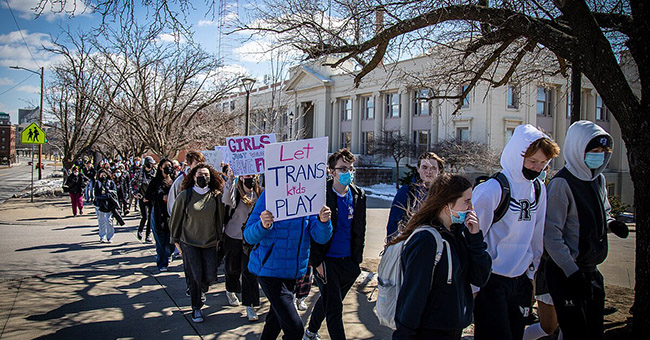
    Students at Central Academy walking out of school over the noon hour and marching to the Governor’s mansion to protest a new anti-transgender law on 11 March 2022 in Des Moines, IA. Photo credit: Phil Roeder

    Students at Central Academy walking out of school over the noon hour and marching to the Governor’s mansion to protest a new anti-transgender law on 11 March 2022 in Des Moines, IA. Photo credit: Phil Roeder

    Editor’s Note: The cruelty is the point and the cruelty continues. School athletic programs should be accessible to all children, including trans children. Yet the Supreme Court has agreed to hear two cases, Little v. Hecox in Idaho and West Virgina v. B. P. J. in West Virginia, that ban trans kids from participating in local school and college sports. Not only do these cases violate Title IX, the federal law prohibiting sex discrimination in education programs, but they also put trans youth at various forms of irreparable harm on and off the field. With the stories of these two brave youngsters fighting against anti-trans bills, Harrison Browne and Rachel Browne show what’s at stake for them and their families in the following passage from Let Us Play: Winning the Battle for Gender Diverse Athletes.

    ***

    The Story of Sunny

    Sunny Bryant is a ten-year-old trans girl who lives with her family in the Houston area. She’s got bright blond, shoulder-length hair and a wide, infectious smile. She enjoys teasing her mom Rebekah and running around with her puppy. When you speak with Sunny, she’s immediately engaged in the conversation, and you can tell she’s deeply curious and inquisitive. She’s excited to share things about her life with you, and she’s open and full of energy and spunk. But, most importantly, she likes to brag about how fast she can run and that her middle name, Jet, fits her well. When Rebekah was pregnant with Sunny, one of her baby shower gifts was a stopwatch in order to time how fast her future child would be. Rebekah and her husband, Chet, love sports and play recreational softball, so it was the perfect gift for parents like them who want to pass down their love of sports to their children. You could say the stopwatch worked, as these days, Sunny is excelling at softball, but is eager to try rock climbing. But amid all the positivity and happiness that surrounds Sunny, there’s an undeniable hum of anti-trans sentiment in their home state of Texas, and what Sunny’s future, athletic and otherwise, looks like remains uncertain.

    Even at such a young age, Sunny has become embroiled in the battle for trans inclusion in sports and a symbol for the ways in which harmful rhetoric and regulations impact kids like her. Just two years ago, when she was eight, Sunny and Rebekah testified before state legislators to halt proposed laws that would ban trans girls from participating on sports teams that aligned with their gender identity. Sunny and her family joined a growing number of trans youth and their allies who were standing up to the government in the name of equality and fairness. Throughout 2021, Rebekah went to the Capitol at least six times—at a personal financial cost of more than $3,000 for taking time off work—to advocate against the bills. Sunny herself testified against the sports bans twice. While testifying, she told congresspeople about her love of baseball, tennis, gymnastics, and soccer. None of her classmates cared that she was trans, she said. “Kids care about what’s in your heart,” Sunny continued. “Only old people can’t see that.” Even the Republicans chuckled at Sunny’s jab.

    The second time that Sunny testified was after midnight, long past her bedtime. Up until this point, Sunny’s experience testifying had been relatively positive. She and her family had come away from these sessions feeling energized and supported in their advocacy efforts. But this time, things took a darker turn. Sunny left the session feeling dejected and discouraged. She broke down in tears to Rebekah when they returned to their hotel room. “Why do so many people not like me?” Sunny asked her mother. It was the first time she had expressed any pain or anguish toward this issue and this process. These are feelings that no child should have to endure, especially at such a young age. For the next little while, Sunny began to show signs of anxiety, though those eventually dissipated. It was a rude awakening for Sunny and her entire family. Rebekah hasn’t brought Sunny back to the Capitol since, seeing it as a potential trigger for her child, who only wants to be loved and accepted for who she is and be free to do the things she loves just like her cisgender classmates. They’re trying to live their lives in peace as best they can for now.

    A parent will do anything to protect their children, and some outsiders viewing these sports bans from afar may question why parents of trans children stay in these hostile environments. Why not move away to a state or place that’s more welcoming and inclusive? Families like Sunny’s, who are being attacked at all angles, should not be driven out from their homes and forced to move away from a community they’ve built to protect their child from harm. “We built a life here and I love my job. I have a great career and position that I’ve worked really hard for,” Sunny’s mother, Rebekah, told us in the summer of 2023. “We have a great community. We live in a little bubble. They love their school. My husband likes his job. We have everything set up pretty comfortably.” Rebekah had never decorated a home before, and she recently did so for the first time with theirs, from top to bottom, with furniture accessories that she loves. “We’re sort of digging our heels in, and yeah, we know if we move to LA, we’re going to be in a tiny apartment. The cost of living is different even with good jobs. We’d like to keep it [our house] as much as possible,” Rebekah continued.

    The Story of Libby

    Before Sunny and her family took up the mantle of advocating for trans inclusion in sports in Texas, there was Libby Gonzales, who took on the state’s infamous bathroom bill years earlier. It’s jarring to think of the burden these young children must endure to achieve basic equality and dignity, but they are the ones who are being impacted and harmed the most. Libby was three years old when she began identifying as a girl. During a trip from their home in Texas to California, this became clear to Libby’s mom and dad, Rachel and Frank, when Libby expressed a strong desire to purchase a fairy costume with a pink skirt and matching wings from a toy store they stopped at along the way. Libby grew out her hair and felt her best when wearing clothing that was “girly.” By the time she turned six, Libby asked her mom whether Santa could make her a girl for Christmas. Rachel told Libby that she didn’t have to wait to get girl’s clothes. Over the following six months, she started wearing feminine clothes and eventually changed her name and pronouns. The transition for Libby, and the entire family, wouldn’t be without its challenges and learning curves, but seeing Libby live as her authentic self became a gift for the family. And it would help lay a positive foundation for Libby’s mental health going forward. A 2017 study in the Journal of the American Academy of Child and Adolescent Psychiatry found that parents who allow their transgender children to socially transition nearly eliminate the high risks of depression and feelings of low self-esteem they might otherwise experience.

    By the time she was seven, Libby had become a warrior for trans rights in her home state. It was July 2017, years before the most recent attacks on trans rights and trans athletes, and Republican state legislators were trying to push a bill that would restrict trans people from accessing public restrooms that aligned with their gender identity. Libby, along with her mother and younger sister Cecilia, who was four, and her two-year-old brother Henry, joined hundreds of others at the Texas Capitol building to protest that bill and speak to legislators directly about the detrimental impacts of the proposed law. It was the third time in as many months that Libby and her family made the nearly four-hour trek to the Capitol to advocate against the bill and try to bring as many legislators as they could to their side. The last time the Gonzales family was there in April, they weren’t called to testify until 2 a.m., by which time Libby had fallen fast asleep and couldn’t give the speech she had spent hours preparing. So while she slept in her father Frank’s arms, he pleaded to legislators on her behalf to not force his daughter to use men’s bathrooms in public. “It would force her into a hostile environment to publicly out her every time she needed to use the restroom,” Frank urged.

    The Gonzales family formed part of a burgeoning network of families of trans kids who decided, out of necessity, to become activists in the wake of the anti-trans bathroom legislation being pushed by Texas governor Greg Abbott, who remains in office as of this writing. This type of activism meant taking time from work, opening themselves up to harassment online and in real life, and speaking to Republican lawmakers, many of whom had already firmly made up their minds on the matter, and weren’t open to listening to their perspectives. That hot summer day in 2017, Libby finally had her turn to address the lawmakers who were trying to keep her from using the bathroom of her choice—a basic human right. “I love my school and my friends, and they love me, too,” Libby said. “I don’t want to be scared to go to the restroom in [public]. And I never ever want to use the boys’ bathroom. It would be so weird. Please keep me safe. Thank you.” Libby’s mother then took the mic, saying she was tired of having to defend her daughter and her rights. “Please, please keep in mind that we need to keep every single child in this state safe,” Rachel said. The Gonzales family left the room and Libby broke down crying. Her father embraced her and said he loved her.

    A month later, the bathroom bill died after losing ground and support that summer. LGBTQ+ activists were obviously relieved and pleased with that outcome, but it would just be a few short years before they would be confronted with an even bigger fight. Today, trans rights and those of all LGBTQ+ people are under threat in Texas, perhaps more than any other state. The ironic part of the bathroom bill was that it lost ground largely as a result of sports governing bodies and large corporations putting their foot down against transphobia. Companies including IBM, Apple, American Airlines, Capital One, and Ben & Jerry’s, along with more than 650 business interest groups and chambers of commerce, staunchly opposed the law and threatened to boycott the state if it passed. They pointed to a similar, successful corporate initiative in North Carolina that in 2017 led to legislators rolling back a bathroom bill passed the year before. The state had suffered millions of dollars in losses as a result of the bill—with a projected $3.76 billion in total losses had the ban remained in place—through major event cancellations and boycotts, including the NCAA’s ban on holding championships there. In the end, sports leagues and organizations actually have the potential to protect trans kids like Libby from discriminatory measures. Now, five years later, sports are being weaponized against them, and have become one of the biggest threats to trans kids and their ability to live freely in the United States.


    About the Authors 

    Harrison Browne is the first transgender athlete in professional hockey. He was part of the National Women’s Hockey League and played for the Metropolitan Riveters and the Buffalo Beauts (winning a championship with both teams). He helped form the first-ever transgender policy in professional sports to aid both transmen and transwomen in their participation. He is the appointed inclusion leader for the NWHL advisory board and special ambassador for the National Hockey League’s Hockey Is for Everyone initiative. Harrison has been featured in the New York TimesGQ MagazinePlayers’ Tribune, The Olympic Channel, VICE News, ESPN and many more news outlets. He continues to participate in talks and panels throughout North America and internationally.

    Rachel Browne is an award-winning investigative journalist and documentary producer whose work appears in VICE NewsPOLITICOGlobal NewsMaclean’s magazine, Discovery+, and elsewhere.

  • By Paul Ortiz

    HaymarketRiot-Harpers

    The Haymarket Riot. Image credit: Harper's Weekly

    I came of age in a society that did not work. It especially did not function adequately for working-class people and our families. Growing up in the shadows of Watergate, the American War in Vietnam, and deindustrialization, our elders shared two pieces of wisdom to explain the economic and social chaos engulfing our neighborhoods. Firstly, our society was run by rich people. Secondly, our political system was irredeemably corrupt. Putting two and two together, we learned post-New Deal slogans, like “The g-d slumlords run this town” and “To hell with both political parties. They are all crooks.”

    A year before I graduated high school, Sheldon Wolin, Joyce Appleby, Lawrence Goodwyn and other scholars founded democracy, a journal that explained in academic prose what our parents had been teaching us in hard-pressed towns like Akron, Ohio; Fontana, California; Bremerton, Washington (where I grew up); and other places hammered by disinvestment, the Reagan Recession, and a rapidly collapsing safety net. In his 1981 introduction to the journal’s first issue, Wolin described, “ . . . the steady transformation of America into an antidemocratic society.” He went on to argue that,

    Every one of the country’s primary institutions—the business corporation, the government bureaucracy, the trade union, the research and education industries, the mass propaganda and entertainment media, and the health and welfare system—is antidemocratic in spirit, design, and operation.

    Returning from a tour of military duty in Central America in 1986, I embarked upon an intensive study of US history to try to figure out how and why the nation’s political system had been run off the rails. At the same time, I joined the labor movement as a volunteer organizer. I worked with the United Farm Workers of Washington State’s long struggle to unionize the Chateau Ste. Michelle wineries. In 1995, the workers won a union contract which is still in force.

    The success of that campaign, as well as what I learned in labor and African American history in college, taught me that democracy is not a gift from the nation’s “Founding Fathers.” Nor is its source to be found in venerable documents housed in the National Archives. Democracy is people power. It is neighbors exercising principles of self-help, mutual aid, and solidarity.

    I have learned as an activist and as a historian that we owe our most precious freedoms to immigrants, working-class people, and allies who have had to fight what Wolin called “the country’s primary institutions” since the American Revolution to win a modicum of dignity, freedom, and economic security. The United States was not born a democracy. Far from it. Every self-governing institution we currently have—and are desperately hanging onto—was fought for by enslaved African Americans, Indigenous people, labor unionists, LGBTQ activists, and other protagonists highlighted in Beacon Press’s Revisioning History Series.

    The Fourth of July means remembering struggles for both successful and unsuccessful, such as Nat Turner’s rebellion, Sacco and Vanzetti, and the Memphis Sanitation Workers Strike. It means learning from Dana Frank’s magnificent new book, What Can We Learn from the Great Depression: Stories of Ordinary People and Collective Action in Hard Times.

    I took time out from this year’s Labor and Working-Class History Association (LAWCHA) conference in Chicago to pay homage to an important group of our ancestors in struggle. On the first morning of the conference, I visited the Haymarket Martyrs’ Monument at the Forest Home Cemetery in Forest Park, Illinois.

    The monument honors August Spies, Adolph Fischer, George Engel, Louis Lingg, and Albert Parsons. These men were anti-capitalists and labor organizers condemned to death for the killing of seven police officers at the May 4, 1886 rally held in support of striking workers at the McCormick Harvesting Machine Company in Chicago. Except for Albert Parsons, the eight men tried for the killings were first-generation immigrants.

    Spies, Fischer, Engel, Lingg, and Parsons were active in anarchist, socialist, syndicalist, and trade union struggles that found common cause under the banner of the shorter work hours’ movement. Answering organized labor’s demand for national legislation mandating an eight-hour day, hundreds of thousands of workers rallied, marched, and protested across the United States on May 1, 1886. Chicago was the epicenter of the movement, and Albert Parsons and August Spies helped to lead an 80,000-strong May Day march of workers and their supporters.

    In response to police homicides of striking workers at the McCormick works on May 3, anarchists and labor organizers called for a rally at Haymarket Square the following day. It is this event which has become known as “The Haymarket Incident.” Towards the end of what had been a peaceful protest, a bomb was thrown, and several police were killed in the resultant melee. According to a contemporary report in the Chicago Tribune, many of the police shot during the Haymarket Incident were gravely wounded by “friendly fire.”

    The resultant capital trial of the alleged perpetrators of the bombing was a farce. In pardoning the surviving Haymarket “conspirators” in 1893, Illinois Governor John P. Altgeld noted,

    “The prosecution could not discover who had thrown the bomb and could not bring the really guilty man to justice, and, as some of the men indicted were not at the Haymarket meeting and had nothing to do with it, the prosecution was forced to proceed on the theory that the men indicted were guilty of murder because it was claimed they had at various times in the past uttered and printed incendiary and seditious language, practically advising the killing of policemen, of Pinkerton men and others acting in that capacity, and that they were therefore responsible for the murder of [police officer] Mathias Degan.”

    I believe the Haymarket martyrs are more important than ever as we reflect on the multiple meanings of the Fourth of July today. Like countless other labor activists in US history, August Spies and his comrades were denied due process, fair trials, and equal justice. Like the situation in such cities as Los Angeles, Chicago, and Denver today, the workers who gathered at Haymarket on May 4, 1886, to protest fallen comrades were harassed, brutalized, and incarcerated. Mexican, African American, and immigrant labor activists in the Gilded Age and Progressive eras were deported because they were anarchists or because they had the courage to stand up for their communities and fellow workers against government repression.

    Honoring the Haymarket martyrs and other dissenting working-class people throughout history on the Fourth of July reminds us that we cannot rely on institutions like the courts or political parties to defend our rights and to save the republic. To do that, we must come together and forge powerful freedom movements for social justice. Solidarity forever!


    About the Author 

    Paul Ortiz is a professor of labor history at the School of Industrial and Labor Relations at Cornell University. He is the author of An African American and Latinx History of the United States and Emancipation Betrayed: The Hidden History of Black Organizing and White Violence in Florida from Reconstruction to the Bloody Election of 1920, among other books. He is currently writing A Social Movement History of the United States, which will be published by Beacon Press.