Ideas, opinions, and personal essays from respected writers, thinkers, and activists. A project of Beacon Press, an independent publisher of progressive ideas since 1854.
In honor of Mother's Day and moms everywhere, where sharing a few of our favorite Mom moments in Beacon books. In these passages we've posted on the Beacon Press Scribd page, we have three varied perspectives on motherhood. Michael Patrick MacDonald reflects upon his mother's strength in a passage from All Souls: A Family Story From Southie. Amie Klempnauer Miller recounts the decision-making path she and her partner went down on their way to becoming moms in an excerpt from She Looks Just Like You. And, in Remembering the Music, Forgetting the Words, Kate Whouley tells the story of the challenges funnier moments of one Mother's Day with her mom.
Did you unwrap an e-reader this holiday season? Or did you treat yourself to one? (Don't worry, we won't judge.) Here are Beacon's most popular e-book titles for 2012 along with a few suggestions for titles sure to be on next year's bestseller list. Download one or two and see why they've inspired people to click and read.
At the time of Frankl's death in 1997, Man's Search for Meaning had sold more than 10 million copies in twenty-four languages. A 1991 reader survey for the Library of Congress that asked readers to name a "book that made a difference in your life" found Man's Search for Meaning among the ten most influential books in America.
"One of the great books of our time." —Harold S. Kushner, author of When Bad Things Happen to Good People
"One of the outstanding contributions to psychological thought in the last fifty years." —Carl R. Rogers (1959)
View the discussion guide for UU communities: HTML or PDF.
Dana, a modern black woman, is celebrating her twenty-sixth birthday with her new husband when she is snatched abruptly from her home in California and transported to the antebellum South. Rufus, the white son of a plantation owner, is drowning, and Dana has been summoned to save him. Dana is drawn back repeatedly through time to the slave quarters, and each time the stay grows longer, more arduous, and more dangerous until it is uncertain whether or not Dana's life will end, long before it has a chance to begin.
"Octavia Butler is a writer who will be with us for a long, long time, and Kindred is that rare magical artifact . . . the novel one returns to, again and again." —Harlan Ellison
"One cannot finish Kindred without feeling changed. It is a shattering work of art with much to say about love, hate, slavery, and racial dilemmas, then and now." —Sam Frank, Los Angeles Herald-Examiner
"In Kindred, Octavia Butler creates a road for the impossible and a balm for the unbearable. It is everything the literature of science fiction can be." —Walter Mosley
In this beautiful and lucid guide, Zen master Thich Nhat Hanh offers gentle anecdotes and practical exercise as a means of learning the skills of mindfulness--being awake and fully aware. From washing the dishes to answering the phone to peeling an orange, he reminds us that each moment holds within it an opportunity to work toward greater self-understanding and peacefulness.
"Thich Nhat Hanh's ideas for peace, if applied, would build a monument to ecumenism, to world brotherhood, to humanity." -Martin Luther King, Jr.
"He has immense presence and both personal and Buddhist authority. If there is a candidate for 'Living Buddha' on earth today, it is Thich Nhat Hanh." -Roshi Richard Baker, author of Original Mind: The Practice of Zen in the West
All Souls by: A Family Story from Southie Michael Patrick MacDonald
View the readers' guide: HTML or community guide:PDF
A breakaway bestseller since its first printing, All Souls takes us deep into Michael Patrick MacDonald's Southie, the proudly insular neighborhood with the highest concentration of white poverty in America. Rocked by Whitey Bulger's crime schemes and busing riots, MacDonald's Southie is populated by sharply hewn characters like his Ma, a miniskirted, accordion-playing single mother who endures the deaths of four of her eleven children. Nearly suffocated by his grief and his community's code of silence, MacDonald tells his family story here with gritty but moving honesty.
The Cure for Everything! Untangling Twisted Messages About Health, Fitness, and Happiness by Timothy Caulfield
In The Cure for Everything, health-policy expert and fitness enthusiast Timothy Caulfield debunks the mythologies of the one-step health crazes, reveals the truths behind misleading data, and discredits the charlatans in a quest to sort out real, reliable health advice. He takes us along as he navigates the maze of facts, findings, and fears associated with emerging health technologies, drugs, and disease-prevention strategies, and he presents an impressively researched, accessible take on the production and spread of information in the health sciences.
Overdiagnosed: Making People Sick in the Pursuit of Health by Dr. H. Gilbert Welch, Dr. Lisa M. Schwartz, and Dr. Steven Woloshin
Drawing on twenty-five years of medical practice and research, Dr. H. Gilbert Welch and his colleagues, Dr. Lisa M. Schwartz and Dr. Steven Woloshin, have studied the effects of screenings and presumed preventative measures for disease and "pre-disease." Welch argues that while many Americans believe that more diagnosis is always better, the medical, social, and economic ramifications of unnecessary diagnoses are in fact seriously detrimental. Unnecessary surgeries, medication side effects, debilitating anxiety, and the overwhelming price tag on health care are only a few of the potential harms of overdiagnosis.
Unchosen: The Hidden Lives of Hasidic Rebels by Hella Winston
When Hella Winston began talking with Hasidic Jews in Brooklyn for her doctoral dissertation in sociology, she was surprised to be covertly introduced to Hasidim unhappy with their highly restrictive way of life and sometimes desperately struggling to escape it. Unchosen tells the stories of these "rebel" Hasidim, serious questioners who long for greater personal and intellectual freedom than their communities allow. In her new Preface, Winston discusses the passionate reactions the book has elicited among Hasidim and non-Hasidim alike.
"Winston . . . builds fascinating case studies, inviting readers into her interviewees' conflicted, and often painful, lives . . . show[ing] us a Hasidic underworld where large families and a lack of secular education have resulted in extreme poverty and some serious at-risk behavior among youth. Her story of courage and intellectual rebellion will inspire anyone who has ever felt like a religious outcast." -Publishers Weekly, starred review
Around noon on January 15, 1919, a group of firefighters was playing cards in Boston's North End when they heard a tremendous crash. It was like roaring surf, one of them said later. Like a runaway two-horse team smashing through a fence, said another. A third firefighter jumped up from his chair to look out a window-"Oh my God!" he shouted to the other men, "Run!"
A 50-foot-tall steel tank filled with 2.3 million gallons of molasses had just collapsed on Boston's waterfront, disgorging its contents as a 15-foot-high wave of molasses that at its outset traveled at 35 miles an hour. It demolished wooden homes, even the brick fire station. The number of dead wasn't known for days. It would be years before a landmark court battle determined who was responsible for the disaster.
Plain Secrets: An Outsider Among the Amish by Joe Mackall
Joe Mackall has lived surrounded by the Swartzentruber Amish community of Ashland County, Ohio, for over sixteen years. They are the most traditional and insular of all the Amish sects: the Swartzentrubers live without gas, electricity, or indoor plumbing; without lights on their buggies or cushioned chairs in their homes; and without rumspringa, the recently popularized "running-around time" that some Amish sects allow their sixteen-year-olds.
Over the years, Mackall has developed a steady relationship with the Shetler family (Samuel and Mary, their nine children, and their extended family). Plain Secrets tells the Shetlers' story over these years, using their lives to paint a portrait of Swartzentruber Amish life and mores. During this time, Samuel's nephew Jonas finally rejects the strictures of the Amish way of life for good, after two failed attempts to leave, and his bright young daughter reaches the end of school for Amish children: the eighth grade. But Plain Secrets is also the story of the unusual friendship between Samuel and Joe. Samuel is quietly bemused—and, one suspects, secretly delighted—at Joe's ignorance of crops and planting, carpentry and cattle. He knows Joe is planning to write a book about the family, and yet he allows him a glimpse of the tensions inside this intensely private community.
“I was born male and now I’ve got medical and government documents that say I’m female—but I don’t call myself a woman, and I know I’m not a man. . . .”
Scientologist, husband and father, tranny, sailor, slave, playwright, dyke, gender outlaw—these are just a few words which have defined Kate Bornstein during her extraordinary life. For the first time, it all comes together inA Queer and Pleasant Danger, Kate Bornstein’s stunningly original memoir that’s set to change lives and enrapture readers.
Wickedly funny and disarmingly honest, this is Bornstein’s most intimate book yet. With wisdom, wit, and an unwavering resolution to tell the truth (“I must not tell lies”), Bornstein shares her story: from a nice Jewish boy growing up in New Jersey to a strappingly handsome lieutenant of the Church of Scientology’s Sea flagship vessel, and later to 1990s Seattle, where she becomes a rising star in the lesbian community. In between there are wives and lovers, heartbreak and triumph, bridges mended and broken, and a journey of self-discovery that will mesmerize readers.
The $60,000 Dog: My Life With Animals by Lauren Slater
From the time she is nine years old, biking to the farmland outside her suburban home, where she discovers a disquieting world of sleeping cows and a "Private Way" full of the wondrous and creepy creatures of the wild-spiders, deer, moles, chipmunks, and foxes-Lauren Slater finds in animals a refuge from her troubled life. As she matures, her attraction to animals strengthens and grows more complex and compelling even as her family is falling to pieces around her. Slater spends a summer at horse camp, where she witnesses the alternating horrific and loving behavior of her instructor toward the animals in her charge and comes to question the bond that so often develops between females and their equines. Slater's questions follow her to a foster family, her own parents no longer able to care for her. A pet raccoon, rescued from a hole in the wall, teaches her how to feel at home away from home. The two Shiba Inu puppies Slater adopts years later, against her husband's will, grow increasingly important to her as she ages and her family begins to grow.
The $60,000 Dog is Lauren Slater's intimate manifesto on the unique, invaluable, and often essential contributions animals make to our lives. As a psychologist, a reporter, an amateur naturalist, and above all an enormously gifted writer, she draws us into the stories of her passion for animals that are so much more than pets. She describes her intense love for the animals in her life without apology and argues, finally, that the works of Darwin and other evolutionary biologists prove that, when it comes to worth, animals are equal, and in some senses even superior, to human beings.
Written during the 1940s and early 1950s, when Baldwin was only in his twenties, the essays collected in Notes of a Native Son capture a view of black life and black thought at the dawn of the civil rights movement and as the movement slowly gained strength through the words of one of the most captivating essayists and foremost intellectuals of that era. Writing as an artist, activist, and social critic, Baldwin probes the complex condition of being black in America. With a keen eye, he examines everything from the significance of the protest novel to the motives and circumstances of the many black expatriates of the time, from his home in "The Harlem Ghetto" to a sobering "Journey to Atlanta."
Notes of a Native Son inaugurated Baldwin as one of the leading interpreters of the dramatic social changes erupting in the United States in the twentieth century, and many of his observations have proven almost prophetic. His criticism on topics such as the paternalism of white progressives or on his own friend Richard Wright's work is pointed and unabashed. He was also one of the few writing on race at the time who addressed the issue with a powerful mixture of outrage at the gross physical and political violence against black citizens and measured understanding of their oppressors, which helped awaken a white audience to the injustices under their noses. Naturally, this combination of brazen criticism and unconventional empathy for white readers won Baldwin as much condemnation as praise.
Notes is the book that established Baldwin's voice as a social critic, and it remains one of his most admired works. The essays collected here create a cohesive sketch of black America and reveal an intimate portrait of Baldwin's own search for identity as an artist, as a black man, and as an American.
Melanie Hoffert longs for her North Dakota childhood home, with its grain trucks and empty main streets. A land where she imagines standing at the bottom of the ancient lake that preceded the prairie: crop rows become the patterned sand ripples of the lake floor; trees are the large alien plants reaching for the light; and the sky is the water’s vast surface, reflecting the sun. Like most rural kids, she followed the out-migration pattern to a better life. The prairie is a hard place to stay—particularly if you are gay, and your home state is the last to know. For Hoffert, returning home has not been easy. When the farmers ask if she’s found a “fella,” rather than explain that—actually—she dates women, she stops breathing and changes the subject. Meanwhile, as time passes, her hometown continues to lose more buildings to decay, growing to resemble the mouth of an old woman missing teeth. This loss prompts Hoffert to take a break from the city and spend a harvest season at her family’s farm. While home, working alongside her dad in the shop and listening to her mom warn, “Honey, you do not want to be a farmer,” Hoffert meets the people of the prairie. Her stories about returning home and exploring abandoned towns are woven into a coming-of-age tale about falling in love, making peace with faith, and belonging to a place where neighbors are as close as blood but are often unable to share their deepest truths.
In this evocative memoir, Hoffert offers a deeply personal and poignant meditation on land and community, taking readers on a journey of self-acceptance and reconciliation.
"No one made us feel better about where we lived than Whitey Bulger. Whitey was the brother of our own Senator Billy Bulger, but on the streets of Southie he was even more powerful than Billy. He was the king of Southie, but not like the bad English kings who oppressed and killed the poor people of Ireland. No way would we put up with that. He had definite rules that we all learned to live by, not because we had to, but because we wanted to." -- Michael Patrick MacDonald, All Souls: A Family Story from Southie
Whitey Bulger was apprehended yesterday in California, after sixteen years on the run, a time during which Whitey sightings were greeted in Boston with an excitement to rival those of Elvis Presley or Sasquatch. But unlike Big Foot or the late King, Whitey was really out there--a fugitive from justice, wanted for racketeering and murder--and still very present in the Boston media and minds of everyone around these parts (and the FBI). Now, an old man, he's surrendered and, allegedly, confessed his sins.
Whitey was a larger-than-life presence in profoundly poor South Boston, where Michael Patrick MacDonald grew up, and a driving force behind the violence that claimed the lives of many--not just those nineteen souls for whom he's been officially charged. The Southie of MacDonald's youth was an insular community that, out of desperation, embraced Bulger as its king, but suffered under his rule.
MacDonald, speaking to the Boston Phoenix in 1999, after All Souls was first released by Beacon Press, said this of the environment where Bulger thrived:
I'd "gotten out," as we like to say -- though we don't say it too loud because it insults the people that are there and offends a lot of people. But when I went back, I saw a lot of the people that had been affected by crime and violence in the '80s, who had lost family members, and who were still living in silence. [...] The world that was created by organized crime and Whitey Bulger -- the culture of death, the culture of drugs, death, and denial.
Of course, Bulger was not the only terrifying force in the neighborhood where MacDonald grew up. In the same interview, Sarah McNaught asks him, "Did you ever draw back for a moment and think, it may not be good, it may not be in my best interests to tell this story?" to which MacDonald responded, "I wasn't scared of neighbors, I wasn't scared of organized crime -- I was scared of my mother."
Dropkick Murphys collaborate with Michael Patrick MacDonald to bring the story of Cornelius Larkin to life
Win signed copies of Dropkick Murphys' latest CD Going Out in Style and Michael Patrick MacDonald's All Souls! See Beacon.org for details.
On March 1, 2011, Dropkick Muphys released their seventh full-length studio album, Going Out In Style. The songs take the band's own personal experiences and family folklore and roll them into the story of one fictional character, Cornelius Larkin. Fueled by fiery riffs and unforgettable choruses, Going Out In Style traces Larkin's journey, whether it's the Irish immigrant's first person account of his own wake or the band's in depth interpretation of his life and lineage throughout the album's lyrics. Ken Casey (lead vocals and bass guitar) reveals, "Cornelius has passed on to the other side, and the album becomes a retrospective of his life. He's one of those guys who immigrated to America at 16, got drafted into the Korean War, married young, had lots of kids, worked hard, and lived a full life rife with different characters, ups and downs, and trials and tribulations. Some of the stories are fictional, but most are odes to our grandparents, friends, and loved ones."
The Dropkicks felt that there was no way to tell a man's whole story in just thirteen songs. In order to round the story out, the band called on their friend, best-selling author Michael Patrick MacDonald (All Souls, Easter Rising). MacDonald wrote an eloquent obituary for Cornelius Larkin in the album's liner notes, along with the beginnings of a more extensive narrative about the album's main character for listeners to delve into. MacDonald became immensely engrossed in the character's development, particularly as Cornelius began to take on elements of MacDonald's own family history. At that point, the story grew into a much longer saga that is available on the band's and MacDonald's websites in conjunction with the album release.
"Collaborating with the Dropkick Murphys is, for me, a family affair," says MacDonald. "Cornelius Larkin represents all that we come from. And this story is about embracing the good, the bad, the ugly and beautiful that we all come from; ultimately learning to work with all of it. Past is truly prelude."
Casey elaborates, "I wrote an outline which began leading to songs. At the same time, I wanted the obituary to have that author's flair, a little more description, a more detailed narrative, and a deeper story. Michael listened to the songs we'd written, and he fleshed out the story and really put a name and a face on the character. It's a new approach and a unique partnership, especially in this day and age. The songs inspire the story, and the story inspires the songs. It's a deep record, and it celebrates a life."
This week's notable praise begins right here in the streets of Boston. As the Hub of the Universe sits down to read together (unified for the first time), here are just a few items we would like to celebrate:
The Sunday edition of the New York Post featured an opinion piece by Gail Dines, author of Pornland, about how an entire generation of men has been jaded by the overabundance of hardcore pornography at their disposal. The Washington Post's Express Night Out featured an interview with Dines about her personal experience writing this book.
Jeremy Adam Smith, author of The Daddy Shift, editor of Are We Born Racist? and the newly awarded 2010-11 Knight Fellow at Stanford University, recently appeared in the July issue of Parents magazine with his take on the reality of being a new dad as well as the expectations and responsibilities of staying home. You can also watch him on the Today Show in a segment on stay-at-home dads.
Steve Wilson's book, The Boys from Little Mexico, paints a portrait of an all-Hispanic boys' soccer team in Oregon en route to the state championship. In a special soccer book post commemorating the World Cup on Nancy Pearl's Book Lust blog, Wilson's book received notable mention as a must-read. The House of Soccer blog also gave it a great review, which makes us want to shout, "Gooooooaaaaaallll!"
After lamenting the absence of a One Book, One City program in Boston, the Globe decided to launch an experiment: a citywide reading program of its own. The comments that followed the story after it ran in the Books section and on Boston.com confirmed what we suspected — local citizens are certainly among the country's most opinionated readers. What better place to host a reading program than Boston? Here's how the Globe online book club will work: What follows is a list of 10 books, many of which were culled from readers' suggestions. The list — we hope — has something for everyone; each book certainly has plenty of meat for discussion. The only theme: All the books have local interest. Readers will have one week to vote for their pick (voting closes July 13). Once the winner is announced participants will then have a month to read the book. At the end of the month Boston.com will host a discussion with an expert moderator.
Go to the Globe website and vote now for the title you'd like to read. The poll closes tomorrow, so cast your vote now!
While many see July as a time for extra vacation days, our authors are hard at work promoting their books both across the country and here in Boston. With topics ranging from controversy over pornography to violence in our prison systems, here is a look at our authors' achievements this week:
In her new book, Pornland, Gail Dines analyzes how the lucrative pornography industry has-- through violence, racism, and sexism—destroyed how the public views sexuality. (The twoexcerpts available on Scribd have been very popular.) At the Huffington Post, Dines discusses the research process for such a controversial subject. The blog at Ms. Magazine has posted the firsttwo parts of a three part interview. At the Guardian, Dines's work sparked debate in the comments stream. Her interview at Pulse was picked up by Andrew Sullivan and moredebate ensued.
Writer and historian Steve Puleo takes a look at the birth of Boston as a major metropolis in America in his new book A City So Grand. A fantastic review of Puleo's book can be found on Boston.com, and be sure to read a free excerpt on Scribd.
In Wealth and Our Commonwealth, Chuck Collins warns about the possibility of a permanent aristocracy in America. In an article for The Nation, Collins makes a connection to Teddy Roosevelt's "New Nationalism" speech and the dangers that accompany giving too much money and power to a select few.
California Lawyer praises Carlos Ball's From the Closet to the Courtroom, saying "[Ball] offers lawyers an enlightening shift of focus, enabling us to understand who 'makes law' in this country, and what motivates them to do so." The book examines five of the most groundbreaking cases that have shaped LGBT rights in the United States; in the Huffington Post, Ball looks at a recent victory.
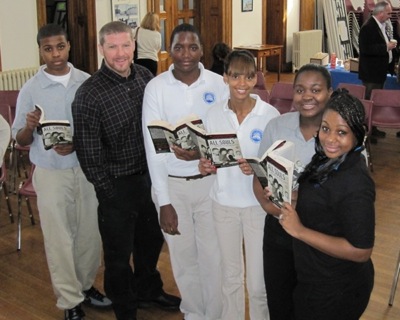
In response to youth violence in the city of Boston, officials have created 400 jobs for at-risk teenagers according to Boston.com. Ninth graders in the program will receive a copy of Michael Patrick MacDonald's memoir All Souls, which recounts his childhood growing up Irish Catholic in the violence of South Boston.
Our Community
About Beacon Broadside
Beacon Broadside, a project of Beacon Press, is an online venue for essays, news items, and dispatches from respected writers, thinkers, and activists about our times.