Ideas, opinions, and personal essays from respected writers, thinkers, and activists. A project of Beacon Press, an independent publisher of progressive ideas since 1854.
If there’s one thing
that stands out for me during my 25 years in Connecticut, it was the quiet but
delicious return of good food and local farms.
For readers who are
less than 40 years old, please remember, there were no farmers’ markets in the
state until 1978. Today, according to the Connecticut Department of
Agriculture, there are 118. There were also no community supported agriculture
farms. Today, according to Connecticut NOFA, there are 70.
Throughout the latter
decades of the 20th century, subdivisions were consuming the state’s
farmland faster than you could eat a Glastonbury peach. Today, between the
state’s farmland preservation program and the Connecticut Farmland Trust, over
325 farms and 40,000 acres have been permanently protected. Overall, the number
of farms is no longer on the decline but actually on the rise. And with equal
importance, residents living in lower income neighborhoods are witnessing a
return of supermarkets to some of the state’s worst food deserts.
Progress like this
cannot be taken for granted, nor can it go unattributed. It was due to the
public will, meaning the actions of thousands of informed Connecticut citizens,
policymakers, and concerned organizations who thoughtfully reshaped the
direction of the state’s then atrophying food system.
I sense such a
destiny-making moment is before Connecticut again. The passage of House Bill
6519, “An Act Concerning the Labeling of Genetically Engineered Food,” would not
only make Connecticut the first state to require such labeling, it would also
give the state’s citizens a chance to chart the direction of their food system.
Labeling food products comprised of ingredients grown or raised by genetically
modified means will grant every Connecticut consumer the opportunity to make an
informed choice, just as they have done for local food, farmland protection,
and access to healthy food for all.
The efficacy and
safety of genetic modification is still in doubt and will be debated for some
time to come. Clearly, the public must engage in this debate and not concede
its outcome to a small number of profit-driven biotechnology corporations, scientists,
and federal officials. But given the pit-bull determination of the food
industry to fight every attempt to rein it in – a fight financed with
bottomless coffers – genetically engineered ingredients will remain on grocery
store shelves for the foreseeable future. That doesn’t mean that we have to
consume them if we don’t want to. Hence, the need for information, which is why
savvy marketers like Whole Foods will soon be labeling GE food.
It is prudent to beware
of food and farm corporations bearing gifts. Like a Trojan horse that appears
one morning on the town common, genetically engineered food proponents claim
that it poses no harm to humans or the environment, and that we need the
technology to feed the nine billion people expected by 2050. Consider the claims and the source. Already,
genetically engineered crops have been associated with the decline of monarch
butterfly populations as well as a greater degree of herbicide tolerance –
requiring more herbicides instead of less. Yields from GE seeds have shown
mixed results, not always exceeding those of conventional or hybridized seeds.
And United Nation’s bodies have not embraced GMOs as a way to feed a hungry
world, proposing instead more sustainable agriculture methods and a greater
emphasis on small-scale farming and social equity in developing nations.
When entering
uncharted territory where risk is prevalent, we should employ the precautionary
principle. This means that the introduction of new technologies require a much
higher level of certainty and scientific consensus than we currently have with
GMOs. As my mother taught me when I first learned to cross busy streets, look
both ways, look again and again, and then proceed with caution.
I’ve always been
proud of Connecticut’s independent streak. A tenacious refusal to accept pat
solutions and the mediocrity of market-driven events has served it well over
the years. Information is power because it gives people the power to choose and
to act. Labeling genetically engineered food will give the state’s consumers
the information they need to make their own choice while allowing its citizens
to choose the food system that reflects their needs and values.
Whether your Thanksgiving dinner is a small affair or a feast of epic proportions, you probably have a favorite dish or two (or eight) that you look forward to eating this Thursday. I asked around the offices of Beacon Press for cherished Thanskgiving recipes and got several tasty replies. The most intriguing came from Crystal Paul in editorial, who teased me with: "I’ve got a killer sweet potato pie that I am the only one in my family who knows the recipe to (my grandma passed it down to only one lucky kitchen devotee). So I’d share it, but clearly, it’s a secret…" Thankfully, others weren't so mysterious.
½ cup butter
½ cup sugar (white)
4 eggs
1 cup sour cream
1 cup heavy cream
1 cup corn meal (yellow)
4 cups corn (whole kernel sweet, frozen)
SEASONING
1 tbs paprika
DIRECTIONS
CREAM butter and sugar together
ADD eggs slowly & MIX well ADD creams & MIX well
ADD corn meal & MIX well
ADD corn & MIX well
TURN batter into a buttered cooking casserole
SPRINKLE with paprika
BAKE @ 325F for about one hour, until custard is set
Kate Noe in Production sent a newspaper clipping of this Harvest Bake, which she has adapted to be vegan by subsituting Earth Balance spread for the butter.
Harvest Bake (6 servings)
INGREDIENTS
1 23-oz can sweet potatoes or yams, drained 8 TBSP unsalted butter 1/4 cup brown sugar, packed 1 TBSP flour 1/4 tsp ground cardamom 2 TBSP chopped pecans 1 apple, cored and thinly sliced
DIRECTIONS
In 1-quart round casserole, mash sweet potatoes until smooth. Melt 7 tablespoons butter and stir into sweet potatoes.
Mix brown sugar, flour, and cardamom in small bowl. Cut 1 tablespoon cold butter into mixture. Stir in pecans and sprinkle 1/2 mixture over potatoes. Arrange apple slices on top. Sprinkle with remaining mixture.
Bake at 350 degrees 35 to 40 minutes or until apples are tender-crisp.
Rachael Marks in Editorial sends her recipe for Hummingbird Cake with this note: "The original recipe appeared in Southern Living in 1978 courtesy of a certain Mrs. L.H. Wiggins of Greensboro, NC (my hometown… yes, I’m clearly biased). I’ve always been a fan of Southern Living’s updated (read: less artery-clogging) version. It can be either 3-layers or 2-layers but should *never* be made in bundt pan (that would be ridiculous and borderline offensive)."
Hummingbird Cake
INGREDIENTS
3 cups all-purpose flour 1 teaspoon baking soda 1 teaspoon salt 2 cups sugar 1 teaspoon ground cinnamon 3 large eggs, beaten 1 cup vegetable oil 1 1/2 teaspoons vanilla extract 1 (8-ounce) can crushed pineapple, undrained 1 cup chopped pecans 2 cups chopped bananas Homemade Cream Cheese Frosting (see below) 1/2 cup chopped pecans
DIRECTIONS
Combine first 5 ingredients in a large bowl; add eggs and oil, stirring until dry ingredients are moistened. (Do not beat.) Stir in vanilla, pineapple, 1 cup pecans, and bananas.
Pour batter into three greased and floured 9-inch round cakepans. Bake at 350° for 25 to 30 minutes or until a wooden pick inserted in center comes out clean. Cool in pans on wire racks 10 minutes; remove from pans, and cool completely on wire racks.
Spread Cream Cheese Frosting between layers and on top and sides of cake; sprinkle 1/2 cup chopped pecans on top. Store in refrigerator.
Cream butter and cream cheese. Gradually add powdered sugar, beat until mixture is light and fluffy. Stir in vanilla.
*I always double the frosting recipe because I simply won’t tolerate a lightly frosted cake.
Abby Mayer in Production sent us a link to this recipe for Apple Salad from Emeril Lagasse, about which she says, "I make this every year, and it is a HUGE hit. No one thinks salad on Thanksgiving… until you force them to with (gasp) blue cheese-encrusted croutons."
As for me, my responsibility at Thanksgiving is the stuffing, or really "dressing" since we never stuff the two Kosher turkeys my mother-in-law prepares for our two nights of feasting: Thanksgiving evening and Shabbat leftover night. Let us know if you try any of these recipes yourself, or share your favorites below. And have a wonderful Thanksgiving! --Jessie Bennett, Blog Editor
Challah Stuffing (serves a bunch of people)
INGREDIENTS
1 large challah 2 TBSP olive oil 1 large sweet onion, diced 2 green bell peppers, diced 3 stalks of celery, diced 2 tablespoons fresh thyme, finely chopped (or 1 teaspoon dried) 1 tablespoon fresh rosemary, finely chopped (or ¼ teaspoon dried and crumbled) ½ tablespoon fresh sage, finely chopped (or ¼ teaspoon dried) 1/2 cup chopped dried apricots 1 cup of apple cider 2 or 3 cups of chicken or vegetable broth
DIRECTIONS
Rip or cut the challah into small pieces and set aside. You can do this a day or so ahead of time.
In a large skillet, heat the olive oil over medium heat. Add the onions and saute until slightly carmelized. This will take a while. When the onions are nicely browned, add bell peppers, celery, and herbs and saute until softened.
Rub olive oil around the inside of a large baking pan. Add the challah pieces, sauteed vegetables, and apricots and mix. Mix the broth and the apple cider together and pour over the bread and vegetable mixture until all of the bread is completely saturated (use more than I indicate if you need it). Bake at 350 for 45 minutes to an hour, until the top is browned and crispy.
Liberals seem to get all the attention for investing and shopping according to their ethical values, perhaps because the Civil Rights movement began with a boycott of the Woolworth’s lunch counter in Greensboro, NC. And since then, the most famous consumer actions have tended to tilt leftward—against Dow Chemical for making napalm during the Vietnam War, or against Nike and now Apple for dreadful working conditions at overseas factories.
So it’s only fair that it’s finally the conservatives’ turn.
Accordingly, gay rights groups have called for a boycott, while Christian conservatives promised to eat more chicken than ever and declared a “Chick-fil-A Appreciation Day.” Conservative politicians like the former presidential candidates Mike Huckabee and Rick Santorum are leading the charge.
Rare though it might seem to be, Chick-fil-A isn’t the first right-wing consumer cause. For instance, there are socially responsible investment vehicles from all sides of the values spectrum. Some religious-based funds avoid companies in the business of selling alcohol, tobacco, and military equipment—seemingly liberal causes—but others shun anything to do with abortion or birth control. The Republican state treasurer of Missouri launched a “terror-free fund” a few years back, to bam companies that have a financial relationship with countries on the federal government’s list of state sponsors of terrorism.
Years ago, Pepsi was known as the “Republican” cola, and Coke was the “Democratic” alternative, because of the political campaigns to which each manufacturer supposedly donated.
As it happens, I’ve never eaten at Chick-fil-A. Until this controversy, I was only vaguely aware of the company, and there are no outlets near me.
On the other hand, I also don’t live near any In-N-Out Burger sites—I’m in New York, and the chain is located only in the West—but my family makes a beeline whenever we are within 10 miles of an In-N-Out restaurant, because we love the high-quality beef and secret sauce. Never mind that this brand, too, could be considered a fundamentalist Christian company, because the late president, a born-again Christian, instituted a practice of referencing Biblical chapters and verses on its paper cups. (Who even looks at the bottom of the cups?)
It’s too soon to tell which side will win the current chicken war. As a liberal, of course I hope the pro-Chick-fil-A movement flounders. I am troubled by the intolerance—indeed, the avid and self-satisfied intolerance—of the chain’s owner. If I ever stumble across an outlet, I will stay away.
Yet in a weird way, I’m glad to see the concept of ethical shopping gaining favor among conservatives.
True, right-wing activism will probably lead to more union-busting or anti-gay bias in the short run, if consumers flock to companies that engage in those practices. Chick-fil-A would undoubtedly rake in less profit if people like Huckabee and Santorum weren’t making such a concerted effort to dine there.
However, in the longer run, this trend could mean a chance for dialogue. With both sides now talking the language of ethical consumption and activism, maybe we can change some minds or find common ground.
We all win when consumers realize that every dollar has a larger meaning.
Today's post is from Aaron Bobrow-Strain, is associate professor of politics at Whitman College in Washington and the author of White Bread: A Social History of the Store-Bought Loaf. He writes and teaches on the politics of the global food system.
In a 1974 New York Times column, the great Craig Claiborne offered the following instructions for filling home ovens with the steam necessary to produce crisp-crusted European artisan bread:
Take two iron ingots, about 6-10 pounds in total, and heat them on a stove burner until “fiery hot.” Then, “using extreme caution and wearing padded asbestos gloves” transfer the glowing ingots to a baking pan at the bottom of your oven. Next, place your loaves in the oven and pour boiling water over the ingots. This will immediately produce billows of scalding steam so “shut the oven as hurriedly as possible.”
I was hooked after “fiery hot” and “asbestos gloves”—what a great project to try with kids! A perfect Fathers’ Day activity!
“Or maybe not,” my wife commented from the other room, reading my mind.
I’m a dad and a slightly obsessive amateur bread baker, but those two sides of me don’t always mix that well. My kids don’t really like to bake bread. They like to eat it, and they like to putter around the edges while I bake. But they don’t yet have the patience to see a European artisan loaf through its 8-15 hours journey from mushy white paste to glorious golden richness.
Or maybe it’s me who lacks patience… Either way, instead of fighting against short attention spans, I weave my kids into the baking process with quick, fun activities. Since I’m a food historian, they usually derive from an oddity of the past.
Here are two favorites that provide a dash of instant gratification during baking day and a way for fathers (0r mothers) to connect with their kids in the kitchen. Even better, there’s only a small risk of explosion.
Instant Bread
In 1939, scientists at the Wallace and Tiernan Laboratories in Newark hooked a ball of dough to two electrodes, cooking it perfectly evenly with no crust formation. This demonstrated something that most bakers already knew: bread’s rich, nutty flavor comes primarily from browning reactions in the crust. No crust, no flavor.
When I asked another dad, who is an experimental physicist and beer brewer, how to reproduce this test, he offered a surprisingly simple option: microwave the dough.
It was an immediate hit, and a great source of pleasure at precisely the stage in baking when my kids start to lose interest.
Here’s how it works: have your kids shape a small lump of rising dough into a ball (about the size of a golf ball). Then microwave it on low for about a minute, or until the dough has doubled in size (and just before it bursts into flames). The result—as predicted by science—is a doughy, flavorless gumball. But my kids love it more than anything. Hands down it’s their favorite thing to do on baking day.
Finish with a Pizza
European artisan breads need to cool for at least an hour, if not more, after baking. Tearing into a loaf too soon interrupts key chemical processes of flavor and texture development—but try telling that to your kids.
Instead, I distract them with an old Italian bakery tradition: set aside a hunk of raw dough (it can sit on the counter under a damp towel while you proof and bake your loaves). Then, as soon as you take your bread out to cool, take advantage of the hot oven and baking stone by making a pizza out of the set aside dough.
There’s a lot of talk these days about how to make “the perfect” pizza crust--all kinds of complicated formulas and mystical thinking circulate on this topic. But, really, any well-fermented Italian or French bread dough will make a delicious pie.
Let your kids stretch out the crust. It will get dropped on the floor and torn full of holes, but they’ll love it (and it’ll distract them from the cooling loaves). Top the crust with whatever you have around. A simple pizza bianca (topped with olive oil, salt, and rosemary) is easy.
The White Bread blog tour has been sliced and wrapped, but you can still get a taste at the following blogs:
AtFannetastic Food, author Aaron Bobrow-Strain discussed how artisan bread baking is less scary than you might think.
Stay at Stove Dadposted some ideas for getting kids involved with baking bread. "I was hooked after 'fiery hot' and 'asbestos gloves'—what a great project to try with kids!"
Read Aaron's "Ode to Stale Bread" at Wasted Food, including advice on tasty ways to use up day-old loaves.
Food Historian Rachel Laudan interviewed Aaron at her blog. "I discovered a strong sense that America’s diet of abundant industrial white bread made us somehow superior to other nations... I also found a lot of people who believed that our system of churning out bread was a unique and important gift America had to offer the world."
And at Food Anthropology, Aaron looks at the "shining aura" that once surrounded the neatly sliced and wrapped loaf of white bread on the supermarket shelf.
If reading all of these blog posts doesn't convince you to read a book that Raj Patel called "a social history that is better than sliced bread," you can listen to Aaron on NPR's Weekend Edition, read about how white bread became white trash on Salon, and watch this ridiculously fun book trailer made by film students at Whitman College.
What do you think about when you hear the words "White Bread"? The wonder food of the 1950s? Fluffy, bland, industrial food? Boring suburban life? Trailer parks and Daisy Dukes? Artisanal sourdoughs with a chewy crust and irregular holes?
In this lively history of bakers, dietary crusaders, and social reformers, Aaron Bobrow-Strain shows us that what we think about the humble, puffy loaf says a lot about who we are and what we want our society to look like.
One idea promoted at last month's UN Climate Summit in Durban was “climate-smart agriculture," which could make crops less vulnerable to heat and drought and turn depleted soils into carbon sinks. The World Bank and African leaders are backing this new approach, but some critics are skeptical that it will benefit small-scale African farmers. Here, in a post that originally appeared on Yale Environment 360, Fred Pearce looks at what this kind of agriculture could mean for some of the world's poorest farmers.
The glacial pace of international efforts to curb climate change continued at the UN climate talks in Durban, South Africa last month. Governments concluded that by 2015 they should agree on legally binding targets for greenhouse gas emissions that involve all major nations — including China, India and the United States. But they also agreed that those targets would probably not come into force until 2020.
The climate isn’t waiting for the diplomats. Most experts agree that by 2020 it will likely be too late to halt dangerous warming above two degrees Celsius. So the race is now on to find new, unconventional initiatives to fill the gap. One possibility that came to the fore in Durban is fixing some of that carbon dioxide in the soils of Africa. And that is why the continent’s political leaders met in Durban to launch an initiative known, somewhat cryptically, as “climate-smart” agriculture.
The new buzz phrase went down well. Host president Jacob Zuma extolled it. Kofi Annan, the Ghanaian former UN secretary-general, praised it as a panacea to Africa’s problems. “Till now agriculture has been sidelined from climate change discussions,” he said. “But Africa has a huge potential to mitigate climate change.” Beside him sat the Ethiopian Prime Minister Meles Zenawi, the chair of the African Union Commission. They were all on hand as the World Bank announced plans to turn climate-smart agriculture into the next big thing for the world market in carbon offsets.
So what exactly is climate-smart agriculture? It sounds as if it might involve making agriculture resilient to climate change, by making soils and crops less vulnerable to droughts and heat waves. And that is part of the plan. But only part. The real prize — the one that can lure private finance — is the potential for carbon offsetting. If farm soils can be used to soak up carbon dioxide from the atmosphere, then they can generate carbon credits that can be sold to industrial polluters who want to offset their emissions.
The offer from the world of carbon finance to poor farmers in Africa and elsewhere is this: Let us use your soils to capture carbon from the atmosphere, and we will, in return, make those soils more productive and less vulnerable to the climate.
This is a big deal. Nurturing the organic matter in soils on the world’s farms has as much potential to absorb carbon dioxide emissions from industrialized countries as the much better-known plans to fund forest conservation, such as REDD. Rattan Lal of the Ohio Agricultural Research and Development Center at Ohio State University suggests soils worldwide could capture as much as a billion tons of carbon a year — more than a tenth of man-made emissions.
Climate-smart agriculture neatly combines the twin goals of today’s climate negotiators, helping to prevent climate change while at the same time adapting farms to inevitable change.
Africa is the big prize. Its farmers are more vulnerable than any others to climate change. Some estimates suggest a hotter, more dire world could cut African farm yields by as much as 20 percent by mid-century. Without an African green revolution, that would spell disaster for a continent with a population that is expected to double to two billion people.
But the continent’s huge land area — greater than the U.S., China, India, Mexico and Japan combined — also holds huge potential as a planetary carbon sink that, many believe, could create the necessary green revolution.
Currently, African soils are leaking carbon as they erode and lose organic matter due to bad farming practices. An estimated 43 percent of Africa’s greenhouse gas emissions come from land clearance, including farming. But the same soils could be turned from a carbon source to a carbon sink, absorbing many tens of millions of tons of carbon a year, according to the UN Food and Agriculture Organization (FAO).
If an agricultural carbon offset program were in place, carbon dollars from Western companies could pay for composting, mulching, recycling crop waste, planting farm trees, and much else on the world’s poorest farms. Those improved soils, richer in organic matter, would grow more crops, help soils withstand droughts and floods, and — vital to earning those carbon dollars — capture carbon from the atmosphere.
The World Bank is keen to mastermind a global effort to fix carbon in African soils. It brought agriculture ministers from across the continent to Johannesburg in September to promote the idea and continued to push it in Durban.
For the past year, the bank’s BioCarbon Fund, which sets up demonstration carbon-capturing projects in both forests and farms, has been running the first pilot African soil project among smallholder farmers near Kisumu in western Kenya. The bank’s climate envoy Andrew Steer said in Durban that the maize and bean farmers “are getting higher yields, improving the resilience of the soils to drought and getting stronger soils that sequester more carbon.”
If all goes according to plan, the Kenya Agricultural Carbon Project, which covers 40,000 hectares of farmland in a densely population region of the country, should capture 60,000 tons of carbon dioxide a year. It could also increase annual farm incomes by $200 to $400 per hectare.
That’s the plan. Will it work? The Stockholm Environment Institute, a think tank that looks at both climate and development issues, is supportive. The institute’s Olivia Taghioff, who has studied the Kenyan scheme, says, “Carbon finance even in modest amounts can make a big difference for smallholders.”
But there are concerns. In Durban, Annan warned: “These efforts must have at their heart smallholder farmers. Without their participation we will fail.” And many critics fear that climate-smart agriculture is in reality a Trojan horse for marginalizing smallholder farmers. They believe the arrival of carbon markets, brokers and traders in the fields of Africa can do nothing but harm.
“Soil carbon offsets will promote a spate of African land grabs and put farmers under the control of fickle carbon markets,” said Teresa Anderson of the UK-based Gaia Foundation, an NGO that promotes indigenous farming, speaking in Durban. “The [World] Bank’s agenda is more money for the bank and for carbon project developers, not development,” said Doreen Stabinsky of the Minneapolis-based Institute for Agriculture and Trade Policy.
The high costs of employing scientists, consultants, and field surveyors to assess and monitor the carbon uptake of farm soils will make it impossible for smallholder farmers to pocket any income from the sale of the carbon absorbed by their soils, these critics maintain. Only large landowners will be able to reduce these transactions costs sufficiently to profit from the carbon markets, they say, and the result will be a new phase of land grabbing. “Soil grabbing,” some are calling it.
Across Africa, governments are already leasing wide areas of land traditionally used by smallholder farmers to foreign companies for industrial agriculture or for planting trees as carbon sinks in order to gain carbon credits. The fear is that the process will accelerate if the soil itself becomes a carbon commodity.
There is another reason why peasant farmers may lose out. Early evidence gathered by the World Bank in Kenya suggests that the cultivation of commercial crops of the kind that large agribusinesses specialize in have a much greater potential to soak up carbon than smallholder subsistence crops.
Data presented last year at the FAO in Rome by Rama Reddy of the World Bank’s carbon finance unit show that the carbon-capture potential for a hectare of smallholder maize in Kenya is around half a ton of carbon dioxide per year, whereas the potential for commercial biofuels is between 2.5 and 5 tons, and for a sugar cane plantation up to 8 tons per hectare.
The dream of enthusiasts for climate-smart agriculture is that investors will one day invest billions of dollars in the fields of Africa in order to purchase the resulting credits from capturing carbon, while at the same time improving the continent’s soils. In truth, any credible solution to climate change will probably involve finding ways to get the landscape to absorb more carbon, whether in trees or soils, probably financed from carbon markets. Can it be done in a way that helps smallholder farmers? Or will it drive them off their land? That remains far from clear.
The rum-soaked beverage and balmy breeze were starting to erode my leftist resistance to luxury. Let’s face it, sipping a Mai Tai from a beachfront terrace with a million-dollar view of Diamond Head will dull the edge of the most hardened class warrior. But just as I was slouching into vacation mode, I made the mistake of cracking open Sarah Vowell’s Unfamiliar Fishes. With my second cocktail in one hand and her book in the other, I soon discovered the whole sordid tale of how Christian zealotry, political chicanery, and ruthless exploitation dropped the Hawaiian Islands into the laps of America’s 19th century conquistadores.
Damn, just as I was starting to enjoy this place my social conscience kicks in!
Motivated – though somewhat reluctantly – to find Hawaii’s contemporary oppressors, I accepted an invitation from Derrick Kiyabu to visit MA’O Organic Farm on Oahu Island’s west side. The drive took me past Honolulu’s cheek-to-jowl ocean view condos and the Pearl Harbor Naval Base before the H1 Freeway deposited me onto Highway 93. This is the approximate place where the sign “Now Leaving Paradise, Welcome to Poverty” would be placed if tourist officials chose to acknowledge such things. But lacking most of what vacationers are looking for from a tropical getaway, the Wai’anae Coast, as it is commonly known, can only offer fast-food joints, scruffy commercial buildings, and residential housing that rival the worst of third-world Asia. I guess this is why the Lonely Planet guidebook refers to the region, almost quaintly, as “a little bit of Appalachia by the sea.”
My pre-farm tour reached a crescendo when I happened by a homeless encampment cobbled together along a one-mile stretch of state beach. Late model cars – many rusted and in various states of disassembly – jerry-rigged shelters, and a mish mash of makeshift camping and cooking gear presented such a scene of utter destitution that even knuckle-dragging conservatives would advocate for immediate relief.
As I moved inland a couple of miles, the landscape and impressions changed. Small sections of dry, flat farmland intermingled with vast tracks of military land – securely fenced and sporting giant arrays of submarine-tracking sonar towers capable of detecting a flushing toilet in a Russian sub north of Okinawa. It is here though, amid palm and banana trees, that you’ll find the peaceful acres of MA’O Organic Farms, armed with nothing more dangerous than wholesome organic produce and 40 or so farm interns between the ages of 17 and 24.
Like almost all the interns and staff, Derrick is wearing the farm’s “No Panic, Go Organic” t-shirt. Noting some of the underlying principles of the program, he reminds me that “pre-contact” Hawaiians were 100% food self-reliant and that their traditional farming methods were totally organic. In a more pragmatic vein, he also explains the program’s business model: “Organic produce generates the most revenue from our customers such as Whole Foods, numerous natural food stores, CSA members, and Honolulu’s high-end restaurants.” As a self-described social enterprise, the non-profit farm generates 40 percent of its million-dollar-plus annual budget from produce sales. This is how they support the youth development and leadership program that is at the core of the farm’s mission. Promoting food security in the surrounding region is secondary to the need to generate funds for instructional costs, community college tuition, and stipends for the workers.
Without a doubt, the produce is top-notch. The packing sheds – two retrofitted chicken coops – are filled with interns washing and packing perfect heads of green and white bok choy, glowing red radishes, and gorgeous greens. A big whiteboard lists all the customers and the number of units each will purchase that day. As the young people pack each order in MA’O Farms custom boxes and load them on to the refrigerated delivery truck, the pride is evident in their smiles; after all, they grew it, picked it, and packed it. From the sales revenue, they’ll be paid a monthly stipend by it. Moreover, the produce will help send them to college.
But MA’O isn’t just another scheme to reconnect kids to land, food, and a little income. According to Kamu Enos, MA’O’s Social Entrepreneur Director, the farm is a training and leadership development program designed to overcome the poverty and social dysfunction that was so evident on my drive in. He tells me that “this region of Oahu has the highest concentration of native Hawaiians on all the Islands. We also have a 20% poverty rate, which is disproportionately higher for Hawaiians. Over 40% of our kids drop out of school and only 10% of our graduating high school class goes to college, and many of those leave during the first year.” Derrick puts the problem more succinctly, “Our public education system has ripped off our kids.”
When I noted the unusually high number of very heavy people I saw in Wai’anae, Kamu explained that, like other Native American communities, the ravages of Spam, loss of land, and the decline of traditional practices have taken their toll on peoples’ bodies as well as their souls. In what might be called the second wave of white man’s disease (the first, as Sarah Vowell makes clear, was the 19th century smallpox and measles epidemics brought by missionaries and seamen that reduced the native Hawaiian population from 300,000 to 40,000), the American fast-food diet and the paucity of fresh fruits and vegetables are degrading the community’s health. “The root problem,” said Kamu, “is the disconnect between our land, people, and economy. Instead [of controlling these things], we exist under the predatory practices of the military.” Not only does the Defense Department control most of the land in the region, military recruiters find local Hawaiians easy targets for enlistment because good civilian job opportunities are so few.
Getting control of land, especially for farming, is a daunting challenge for Hawaiians – there’s not much affordable, arable land that developers don’t already have their mitts on. But sugar daddies do show up, and they are not always the kind that operated sugar cane plantations. In MA’O Organic Farms’ case, the sweet guy is none other than Pierre Omidyar, founder of E-Bay. He generously dropped a cool million on the program, which, with assistance from the Trust for Public Land, bought the 11 acres that are now the heart of the farm.
Pua, 21, is a MA’O youth leader and the first member of her family to go to college. She recently received her associate degree from Leeward Community College and is scheduled to start at the University of Hawaii at Manoa in August. She tells me that high school didn’t prepare her for college, but with her mother’s encouragement and MA’O’s help – counseling, remedial instruction, and peer support – she’s climbed some pretty steep personal cliffs and is now ready for bigger challenges. While she’s not likely to pursue farming as a career she credits the farm program with giving her the emotional tools she needed to succeed. “The farm experience is an inspiration. Like college, it’s hard work. The farm grounds you because you have to manage your time, you have to work as a team with others to succeed, and you have to face the consequences of your actions.”
For other young people like Pua, the path out of poverty starts with a walk down the farm’s vegetable rows. Many start to eat better and lose weight. Kainoa is one youth worker who actually lost 130 pounds by exercising and changing his diet. But what the program cultivates even more than the farm’s well composted soil is the interns’ state of mind. Disempowered, brought up with low expectations, some homeless, they were staring at a future that promised little but a swift descent into diabetes and a life in the unemployment line. Now the steps out of poverty are more visible.
To grow and sell a half-million dollars of organic fruits and vegetables every year is no small feat. But to raise dozens of young leaders who can challenge the dominance of the condo kings and restore the economic and physical health of their people would no doubt bring a smile to the ancient kings and queens of Hawaii.
Dan and Isabelle sit patiently on the folding metal chairs in the tastefully decorated waiting room of Seattle’s Ballard Food Bank. Intelligent, soft-spoken, and in his late 50s, Dan is a chronically underemployed architectural draftsman who barely managed to eke out three days of temporary work over the past week. His unemployment benefits have long since evaporated and he’s thinking about applying for food stamps, although he cringes as the words leave his mouth. With his shrunken income dedicated to keeping a roof over his head, he and Isabelle are two among 1,200 or so neighborhood residents who will request a shopping cart-full of food this week at the food bank.
Peggy Bailey, Ballard’s Operation Manager, is one of those dedicated, unflappable souls whose work holds the lives of others together as the larger universe spins out of control. Her recitation of statistics is the “growth” story that you’ll hear from any of the 60,000 emergency food sites across America. “In 2001 we were serving about 350 people per week; four years ago it was 450; now we’re serving between 1,100 and 1,200.” Peggy escorts me past tattooed skateboarders, young women clutching babies, and unshaven men for whom a good night is a dry patch of grass underneath a bridge.
Like all the 25 volunteers (out of a total of 100) on hand this day – good neighbors who keep the flow of people safe and dignified – Peggy beams with pride over the food, large walk-in refrigerators, and the recently retrofitted 6,200-square-foot machine shop that’s been their new home for only a year (after relocating from their cramped, dilapidated home of nearly 40 years). Almost half of the available food is produce, some of which comes from nearby Pea Patch community gardens and local fruit tree gleaners. An abundant supply of artisan bread, fresh dairy products, and even enough frozen meat to give each person two packages, fill the shelves. Not only can you select from a rather remarkable range of products: e.g. microwaveable entrees that retail for $9.00 at Trader Joes, there’s also a “no-cook” section that, in an average month, serves 350 people without kitchens. In addition, nearly 100 bags are assembled and delivered weekly to shut-ins and people with special dietary needs.
Unlike food banks in days of yore, Ballard does more than give away food. If you don’t have a permanent address, they’ll act as your personal post office box, a service currently used by 480 people. Case workers from the Department of Social and Health Services try to connect food bank users with SNAP (food stamps) as well as medical and dental services. Need help paying your rent or electrical bill? You can apply for a $300 voucher for the former and $200 voucher for the latter.
When I asked Peggy how she keeps up with the demand for food, she told me, almost blithely, that enough food was not a problem. In a comment that would make her the envy of every food bank worker in America, she said, “We’ve never had to turn anyone away due to lack of food. This is a very generous community. We have Whole Foods, Trader Joes, Safeway and dozens of other food donors.” While supporting five paid staff, three trucks, and a good-size modern facility, the food bank gets 95% of its operating funds from private donations, receiving only $40,000 per year from Seattle city government. One anonymous individual, for instance, gives the Ballard Food Bank $2,000 each month just to buy fresh dairy products.
In contrast to the generosity of the surrounding neighborhoods, you have the U.S. House of Representatives. If the miracles that these Seattle residents pull off every day make Christ’s feeding of the 5,000 look like a cheap card trick, the House majority’s proposal to slash $3 billion from SNAP, WIC, and TEFAP makes Scrooge look like a Salvation Army volunteer. At a time when the nation’s economy is still on life support and when a record 43 million Americans are receiving food stamps, the House Republicans want to hack the safety net with a machete while leaving the silver cutlery of hedge fund operators untarnished. Take from the poor, but don’t touch a dime of the rich.
Ballard is a human-scale urban environment whose sloping landscape gently lowers you to the shores of the Puget Sound. On street corners, food bank volunteers greet the homeless people by name, who, in turn, respond in a friendly manner, pleased that there are people who don’t avert their eyes. Stroll a few blocks north of Market Street, and you’ll come to a lovely park where grassy slopes and park benches are populated by homeless men catching a ray or two of Seattle’s stingy sunlight. In the opposite corner is a small skateboard tunnel where young dudes, hat brims cocked at precise angles, practice their chutes and curls. Between the skaters and the homeless are several fountains that spray giggling toddlers cheered on by happy moms.
The park reflects Ballard’s values: there’s room for everybody, diversity is encouraged, and the community does its darnedest to meet everyone’s needs. But, beneath this cloak of tolerance, there is a creeping sense that there may be limits to what any group of caring people can do. Perhaps it’s symbolized by the police cruiser stationed just across the street from the “homeless end” of the park. Maybe you hear it in the voices of the young men at the food pantry who were too ashamed to give me their names, but did say that in spite of a couple of years of college they couldn’t find jobs. “We’re not trained for anything.” Or perhaps you can smell it on the breath of the middle-aged drunken man, who according to Peggy had been “doing so well up until now.”
If the House Republicans have their way, the Ballard Food Bank’s waiting room could very well become so crowded that the smiling volunteers will be replaced by stern-faced security guards. When I asked John, an 87-year old food bank volunteer of 12 years, what he thought was behind the ever rising number of clients, he said emphatically, “It’s all about the economy. I see how embarrassed people are who are asking for help, but you can either sleep on the street or come to the food bank.” One has to ask if that is the vision that the budget cutting, non-taxing conservative minority have for America. If that is true, and every statement from the Republican leadership seems to suggest that it is, then one has to ask where the rage is at this time in our nation’s history.
How big must food banks get to contain the ever-swelling legions of un- and underemployed workers? How much food will Ballard’s neighborhood grocers have to donate to ensure that all the young mothers can feed themselves as well as their babies? Is there indeed a tipping point when community compassion can no longer clean up the mess made by mean-spirited politicians who avert their eyes from the growing victims of a failed American dream?
Evelyn, 87, has been volunteering at the Ballard Food Bank for 15 years, longer than anyone else. She’s a feisty, retired machinist who worked for a Boeing Aircraft subcontractor. Sitting at a table where she was sorting nuts into small plastic bags for the home delivery sacks, Evelyn shared the most commonly expressed reason for volunteering at food banks. “If you’ve been blessed, you have to give back.” Yes, I said, I’d heard that sentiment from many people in the emergency food world, but I wondered if there wasn’t something else. At that point the fiery machinist union member took over from the charitable grandmother. Growing up during the Great Depression on a Minnesota farm, she did not need the reason for rage explained to her. “Things have to change in this country,” she said, eyes narrowing and pronouncing each syllable more distinctly. “The idea of not taxing the rich is ridiculous. We have to stop farm and oil subsidies. We got to get politicians to care about people all the time, not just when they’re trying to get elected.”
Compassion and “giving back” may not be sustainable when one class of Americans lives under the House Republicans’ Golden Fleece, while bourgeoning flocks live under highway overpasses. So that compassion may live, we must sometimes release the rage.
It’s pretty well known by now that I lean on Ralph Waldo Emerson the way a drunk leans on a lamppost. When my frustration with politics, society, or even the weather surpasses all understanding, I go running for the shelter of my Emerson-only bookshelf, a privileged nook that no other literary form is permitted to occupy. Like a sweaty boy seeking relief from a hot summer day, I plunge into his cool mountain pond of essays.
“Self-Reliance” gets me out of my funk over society’s impulse to commit mass suicide via mass conformity. Recent readings of “The Fugitive Slave Law” and “Letter to President Van Buren” (concerning the forced re-location of Native American tribes from the Southeast to the Oklahoma Territory) have steeled my resolve to fight today’s injustices. But where I found surprising relief from more personal and seasonal matters came from a lovely piece simply titled “Farming.”
You see, it’s springtime in northern New Mexico, which I’ve come to learn over the course of my seven year probationary term here means absolutely nothing. As a transplanted New England gardener I’ve yet to fully adjust to the unpredictable path our Santa Fe de primavera takes before it settles into a reliable pattern of warm, relatively wind-free days. Forget the lack of water; I learned early on that unless you “bring your own” in the form of a decent irrigation system you might as well find another hobby, or even worse, consign yourself to buying everything at the supermarket. No, I’m talking about those bewitching, blue sky days of May that are savagely followed by 25 degree nights and winds so strong you have to scrape the cat off the barn door.
Seduced by air so sweet, the kind that makes it a “luxury to draw the breath of life,” I fling myself at my garden to poke seeds and plant seedlings in beds that were diligently prepared only a week before. But as soon as the sun sets beneath the Jemez Mountains to the West, a cold blanket of air slips down from the snow-covered Sangre de Christos Mountains to the East. The soil – so friable and warm during the day – turns crusty and unforgiving at night. The coup de grace is administered by 50-mile per hour wind gusts that rise up from the plains to the South and scour the ground into submission. The seeds retreat into dormancy and the plants are found the morning after splayed across the drip tape.
Experience is supposed to be a buffer to surprise. The impact of so-called unpredictable events should be reduced to a manageable level through a reasonable application of probability. The prudent gardener slowly accumulates a number of actuarial tables in his head that check the urge to act only because the calendar tells him to. But when the gardener’s original experience base is New England and his actuarial tables were compiled on the banks of the Connecticut River, he may find himself proceeding before his own biological systems have fully adapted to the new place. And maybe more importantly, what if his circuitry had always been wired for action over contemplation and patience had always been regarded as the weak sister to initiative?
The farmer, “bends to the order of the seasons, the weather, the soils and crops, as the sails of a ship bend to the wind,” writes Emerson. Most farmers I’ve known, particularly the smaller ones whose methods are sustainable and markets local, move slowly and deliberately. They know when a field is ready to plant; they sense when an animal is sick; they intuit when it is time to speed up or slow down. The farmer learns “patience with the delays of wind and sun, delays of the seasons, bad weather, excess or lack of water and times himself to Nature, and acquires that livelong patience which belongs to her.”
In my rush to plant my garden, had I become like the consumer who must have tomatoes year-round and strawberries on demand, or like the industrial farmer who works outside the normal limitations of the seasons and seeks to out-smart nature at every turn? You would have found me in my garden this May cussing out the peas that never germinated or waving my angry fists at the New Mexico gales that had reduced my tomato plants to shriveled, burned-out matchsticks. Staring down at the once beautiful asparagus tips whose life had been cut short by the heartless frost I swore vengeance on the gods who had wrought such devastation.
But a sweeter notion is now pulsing through my veins. The slow drip of Emerson is taking effect; my heartbeat slows to a more natural pace; I’m learning to tack with the wind instead of forcing my way through it. I take a deep breath, stand still and quiet so as to better hear, see, and smell nature’s signals. “Nature never hurries: atom by atom, little by little, she achieves her work.” And I will too.
The 1911 Triangle Waist Factory fire elicited an outpouring of sympathy and helped humanize eastern European immigrant industrial workers in the eyes of affluent white Americans, but reforms aimed at bakeries demonized the workers who the country's single most important food. In today's post, Aaron Bobrow-Strain, chair of the Department of Politics at Whitman College and author of White Bread: A Social History of the Store-Bought Loaf, looks at how reforms in food safety did little to help the workers in that industry, and how fear continues to adversely affect workers in today's food chain.
Last weekend, thousands of people attended events commemorating the one-hundred-year anniversary of Triangle Waist factory fire, which killed 146 young immigrant garment workers just off New York's Washington Square Park. The centennial commemorations, coming at a moment when worker organizing is vilified and under attack across the country, were a chance to remind Americans of the suffering and struggle it took to win basic workplace protections that we take for granted (at least for now).
Child labor laws, workplace safety regulations, sprinkler systems in office buildings, and limits on the length of the work week can all be traced back, at least in part, to the outpouring of anger and sympathy that followed the Triangle fire. As David von Drehle notes in his classic account of the fire and its aftermath, key provisions of the New Deal can even be traced to the tragedy of March 11, 1911. Union workers and non-union workers alike, we all owe a debt to the women who died in the Triangle fire and the labor reformers who took up their cause.
But there is also a lesson in the Triangle fire for millions of Americans who care about working to make a better food system. And, sadly, it is not so inspiring.
After the fire, 400,000 people—almost one in ten New Yorkers—took to the streets, joining a funeral procession for the fallen workers. In the weeks and months that followed, union and upper class social reformers demanded action. Pressure built on the government and businesses to do something to prevent similar tragedies. Charges were filed, blame circulated, and blue ribbon investigatory committees were appointed. Of all the inquiries, the most far-reaching was conducted by the newly created New York Factory Investigating Committee.
Garment factories figured prominently in the Committee's investigations, of course, but the Committee extended its mandate to include other industries—particularly small neighborhood bakeries. This focus might sound a little strange today, when we associate small local bakeries with community, pleasure, and authentic eating. But the reality then was a bit different.
Poorly capitalized and facing cutthroat competition, small immigrant bakeries slashed any cost possible. They stretched and whitened cheap flour with plaster of Paris, borax, ground bones, pipe clay, chalk, alum, and other nefarious compounds. They sold underweight loaves, and they worked laborers as hard as they could. Immigrant bakery employees typically worked 14+ hours a day during the week and 24 hours on Saturday. And they worked underground in damp, super-heated and unventilated cellar bake rooms. As the lyrics of an 1884 union anthem from St. Helen, Oregon, asked, "Full eighteen hours under the ground, Toiling and making bread! Shut off from air and light and sound, Are we alive or dead?"
Beginning in the 1870s, labor organizations were able to bring these abuses to light and raise public outcry about "Slavery in the Baker Shops." Sensational descriptions of unventilated and pestilent cellar bakeries filled local newspapers and echoed through the city's lecture halls. Sanitary inspectors painted pictures of dark, vermin-infested caves with raw sewage dripping from pipes into dough mixing troughs, street dust and horse manure blown onto dough, bread cooling on dirt floors, and whole families sleeping on rag piles in bakeries, alongside their chickens. In the worst cases, bakers worked ankle-deep in water and sewage when storms backed up city drains.
But the outcry was not what unions had hoped for. Rather than rousing sympathy for exploited workers, unions and their allies succeeded in focusing the country's outrage on dirty bread and the dirty hands that made it. By the time of the Triangle fire, small local bakeries were terrifying symbols of physical and social contagion in the minds of middle and upper class consumers.
Thus, although social reformers like Frances Perkins hoped that the tragedy's aftermath would spur changes for immigrant food workers, the Committee had other ideas.
When it came to garment factories and other industrial workplaces, the Committee worked to protect workers. When it came to bakeries, the Committee worked to protect consumers—often at the expense of bakery workers who were consistently reviled as the cause of New York's bread problem, rather than its biggest victims.
With a few exceptions, committee members darted around witnesses' appeals for workplace safety regulations, restating the bakery problem as a question of how best to control immigrant workers. One public health doctor who testified before the committee observed that nearly 100 percent of New York immigrant bakery workers showed signs of tuberculosis, bronchitis, and other lung infections. But the Factory Inspection Committee took this as evidence of bakers' poor hygiene, not unsafe working conditions. As city Health Commissioner Ernst Lederle argued, "cellar bakeries themselves were not the problem," the problem was that "the people were dirty and careless."
Anxiety about small bakeries was a gift to the country's growing number of large industrial bread manufacturers, and they fanned the flames of fear, running advertising about the risk of catching typhus and tuberculosis from immigrant bakery bread. But were small local bakeries really that unsafe for consumers?
Probably not—and this is what makes it interesting. Reading pages of testimony and the reports of sanitary inspectors one thing comes clear: while many other pieces of the American food supply—like milk and meat—were, in fact, threatened by germs, bread was fairly sanitary. Sensationalist reports of contaminated bread were just that: sensationalist.
Affluent New Yorkers were not really anxious about bread, they were anxious about unfamiliar immigrants touching food. The bread coming out of small local bakeries wasn't really a public health threat—at least not a threat to consumers.
But, as Frances Perkins argued at the Factory Investigating Committee hearings, bakeries were a threat to the health of bakery workers. Fixated on a potent combination of fear of germs and fear of immigrants (two things that often go together in America), social reformers had a hard time seeing this, however, even amidst the upwelling of sympathy following the Triangle fire.
While young female immigrant garment workers could be portrayed as helpless innocents (despite their active involvement in strikes and struggles to win rights), "swarthy" male bakery workers could not be allowed to touch the nation's food.
In the end, prompted by the Factory Investigating Committee, New York and jurisdictions around the country passed laws regulating sanitary conditions in small bakeries. The laws, designed to ease consumer anxieties, in some cases made life harder for immigrant bakery workers. For example, many cities passed sanitation regulations making it illegal for workers to sleep in bakeries, but didn't address the 14-18 hour workdays that prompted bakers to grab whatever sleep they could, wherever they could.
What lessons can we draw from this story today? As hard as it's been for American workers to win work place safety protections, it's been harder for food chain workers. It shouldn't be that difficult to see that improving conditions for food workers can only increase the safety of food for consumers, but racialized fears of immigrant hands touching the nation's sustenance often get in the way.
Highland Hills is one of those down-and-nearly-out communities that’s allowed a glimpse of prosperity but never gets to taste it. The Dallas skyline looms large and shining across the hazy north Texas horizon and is linked to this poverty-plagued neighborhood by a seven-mile ribbon of light-rail steel. Ledbetter Avenue crosses the train line passing by vacant buildings, vast stretches of empty parking lots, and a dizzying array of “For Sale,” “For Lease” and “For Jesus” signs. Named for the renowned guitar picker Lead Belly who did time in these parts – both in and out of prison – the Avenue speaks little in the way of promise, but wails the blues of poverty loud and clear.
Like cockroaches in a post-nuclear winter, the neighborhood’s only commercial survivors appear to be pawn shops, Dollar stores, and fast-food joints. One supermarket, a Minyard whose cinder-blocked and windowless façade is about as inviting as the entrance to Stalag 13, is the only retail food source in the several surrounding miles of food desert. But a lifeline from an unlikely source has been tossed Highland Hills’s way by a group of innovative academics. Paul Quinn College, a historically black college that sits just off Interstate 45 at the neighborhood’s eastern edge, is committed to lifting its neighboring community’s physical and economic health with a combination of food, farming, and servant leadership.
There’s no little irony in this partnership. To drive by the Paul Quinn campus is to, well, keep on driving. There are no signature ivy-clad buildings or tree-shaded quads to invite college-shopping families for a leisurely tour. In fact, the first roadside buildings you see are in various states of demolition, reflecting, in part, the plunge in student enrollment from 600 to 100 (it’s now climbed back to 200) and the school’s loss of accreditation (it’s been able recently to earn back probationary status). At first glance anyway, and like the adjoining neighborhood it wants to help, Paul Quinn appears to be hanging on to life by no more than a pea tendril.
But first glances are deceiving, and pea tendrils are stronger than they look. And when your back's to the wall and nobody, even your own government, will help you, you fight like hell, you do the unexpected, and you take risks.
In Paul Quinn’s case, not only did the college take risks, it committed a grievous sin, at least by Texas standards – they terminated their football program and turned their field into an organic farm. Yes, in the shadow of the Super Bowl, with the specter of Tom Landry looking down, and the holy glare of Friday night lights forever dimmed, Paul Quinn ripped up its sacred turf where football cleats once tread, and planted – goalpost to goalpost – peas, lettuce, carrots, strawberries, and more, lots more.
While the roar from the football stands may have subsided, it doesn’t mean that the field has fallen silent. When Andrea Bithell, the farm manager, announced to student and staff volunteers that the kohlrabi had gone in last week, everyone cheered. Showing a group of farm visitors where the corn would be planted later this spring evoked a round of applause from several students who proclaimed their love of its sweet kernels. Indeed the competitive spirit and enthusiasm so much a part of college athletics is hardly lacking at “Food for Good Farm,” the name chosen to denote it’s larger mission of education, community service, and healthy food for all. Sounding more like a coach than a farmer, Andrea uses words like hustle to describe her student crew’s hectic effort to plant and seed the two-acre field. When the volunteers complained about working in the cold and the rain, they were reminded that football games are played in all kinds of weather. Even the plants are forced to compete in a set of 12 trial beds located in the field’s south end zone. Here students will test different growing methods and evaluate their potential financial rate of return.
Elizabeth Wattley, Paul Quinn’s Director of Service Learning, proclaimed with pride that the farm’s tomatoes were better than anything she’d ever bought in a grocery store (she confessed that until her introduction to the farm during its first spring in 2010 she had been afraid of dirt). One student, biology major Symphonie Dawson, giggled when she described the farm’s mascot emblazoned on their t-shirts. “It’s the ‘Fighting Okra,’ an image of the vegetable wearing boxing gloves. We chose it because last year’s okra crop seemed to go on forever.” The “Rah-rah, Go Team, Go!” energy previously reserved for football games has been channeled into the end-zone to end-zone planting of 1,500 strawberry plants, 6,600 onions, a new asparagus bed, and dozens of varieties of vegetables. “The farm is the light of the college,” is the assertive way Elizabeth put it.
For a school that was on the ropes, Paul Quinn has gained a reprieve by discovering the multiple benefits of farming while also turning its attention outward to the community. One prominent need that the farm is already addressing is healthy living and eating, no small concern on today’s college campuses, especially one that is surrounded by a food desert. “Before their work on the farm, students wouldn’t eat carrots unless they were smothered in Ranch dressing,” noted Andrea. But by getting their hands in the dirt – a task that usually took two or three visits to the farm to get past the “yuck” declaration – students started eating carrots right out of the ground, dirt and all. “They actually taste,” said Elizabeth, pausing for a moment to find the right adjective, “carrot-tee.”
By engaging students enrolled in the school’s biology and social entrepreneurship courses, the farm gives scores of people in their late teens and early twenties a chance to get hands-on laboratory experience at the same time they get their hands in the dirt. Even the students who don’t care to venture into the world of bugs and compost get a taste of the farm’s output. Paul Quinn’s cafeteria now offers a monthly feature designed to showcase the farm’s harvest and introduce students to food that is healthy, tasty, and oh-so local. But Jasmine Wynn, a freshman legal study major, may have summed up the farm’s health benefits best. “I’m a city girl from Dallas, and for me the farm was something new. I liked being out there. I also started getting serious about my diet last year and decided that organic food is better for you. It’s just part of a healthier lifestyle, and I want to stick around for a long time.”
The lack of farming experience or a farm background has not been a deterrent to anyone’s participation, including Paul Quinn’s President Michael J. Sorrell. With public policy and law degrees from Duke University, his stellar resume indicates he has represented American Airlines and Morgan Stanley, served on numerous prestigious commissions including an assignment at the White House, and was selected in 2009 as one of the 10 Best Historically Black College and University presidents. Notably lacking from Dr. Sorrell’s career synopsis, however, are any agricultural credentials, and ironically, his business achievements include representing top-flight athletes like Utah Jazz All-Star Deron Williams. So why did he eliminate the football program and then have the audacity to convert the field to a farm?
A big part of the answer no doubt lies in his personal commitment to the concept of servant leadership, which, like the farm, he brought to Paul Quinn. With such simple but difficult to live by ideas like putting others before self, leaving the world a better place than you found it, and maintaining a spiritual faithfulness, Dr. Sorrell not only preaches what he practices (he personally teaches a freshman course in servant leadership), he practices what he preaches. And the farm is at the center of that practice.
Isaiah 58: 9-12 gets prominent mention on the College’s website which also touts the school’s Christian underpinnings. The scripture admonishes us (some would say “teaches us”) “to pour yourself out for the hungry…then shall your light rise in the darkness…and you shall be like a watered garden.” Holding aside the self-interest in doing good (and why not?), The Food for Good Farm has its heart and mind set on serving the hardscrabble community that surrounds it. Though a share of the harvest goes to the school’s cafeteria, 10 percent goes to a local food pantry, a sizeable share is also sold on a weekly basis to the community from the field’s former hot dog stand, and just to preserve some historical symmetry, the Dallas Cowboys buy a small share of the farm’s organic veggies, which, if sustained over time, will no doubt catapult “America’s Team” into a Super Bowl.
The school’s initial attempt to solve the community’s food access problem was to offer free land to any supermarket that wanted to build a store there. But there were no takers in a marketplace where nearly 40 percent of the residents lived in poverty. So like in days of old when the nearest general store was 100 miles away, and your only choice was to shoot or grow your dinner, Paul Quinn took to farming. The “adaptive re-use” of the football area has been impressive under Andrea’s and Elizabeth’s leadership. Not only are the hash stripes gone but so are the top four inches of sod and dirt that were replaced by dump truck loads of pure organic matter. Reflecting the program’s absolute commitment to organic farming, there was simply too much distrust of the chemical residues from years of maintaining a perfectly green gridiron. The goalposts remain as do the blocking sled, scoreboard and the entire set of bleachers running the length of both sides of the field. But the former press box is about to be turned into a chicken coop and Elizabeth retains some hope that the bleachers can be retrofitted as a greenhouse. Acres of adjoining and nearly vacant land are already being eyed for farm expansion, especially if a recently applied for federal grant comes through. On the day this reporter visited, a local apiarist was scouting out locations for nearly a dozen beehives. And according to Symphonie, the campus’s coolest guy, a very sharp dresser from Brooklyn, NY, wants to join the “bee program.”
None of this extraordinary progress has come cheaply. Elizabeth estimates that well over $100,000 in capital expenditures have been required to accomplish this conversion, and the on-going operating costs –Andrea is on the payroll half-time as is a variety of students who receive some compensation, especially during the summer season – are only marginally offset by farm sales. An upcoming April fundraiser featuring urban farming rock star Will Allen will hopefully swell the coffers sufficiently to enable the farm to buy its own tractor (it now pays for contract equipment services).
But the rapid development of the farm and the rising fortunes of Paul Quinn College have come with a price – small or large depending on your perspective. The Good Food Farm is the result of a fifty/fifty partnership between the college and PepsiCo’s Food for Good Initiative. The college makes it clear that this is an equal partnership and that PepsiCo has not placed any strings on their giving. While Elizabeth acknowledges some inherent contradictions – yes, Pepsi and other soda manufacturers have contributed more than their fair share of calories to America’s obesity crisis – she feels their support has been entirely above board. Other than cleaning up its tarnished image, one cannot detect either covert or overt sinister motives in PepsiCo’s support. Yet, with 11 teaspoons of sugar in each 12 ounce can of Pepsi-Cola and their ferocious attempt over the years to hook children with their iconic brand, one can’t help but confront the ethical contradictions: where does the greater good lie, and when does one begin to slide down the slippery slope? Though the Bible offers little in the way of guidance when dealing with the PR strategies of modern corporations (obesity, for instance, having not appeared on the world stage for another 2000 years), the college might choose to at least make the topic grist for future classroom discussions.
In the meantime, it’s hard to argue with the outcome of the Paul Quinn/PepsiCo partnership. Texas has one less football field and one more organic farm, clearly a net gain for humanity. Students from the captain of the basketball team to entering freshman are eating better, getting over their aversion to bugs, and getting their hands in the dirt (Symphonie noted that her nails look much healthier now that she regularly jams them into the soil). And the Highland Hills neighborhood is enjoying the health and aesthetic benefits of living adjacent to Dallas’s closest farm.
Under Dr. Sorrell’s able leadership Paul Quinn is rising from the ashes, or should we say compost pile. Elizabeth and Andrea are guiding the growth of what would be considered an ambitious venture at a major university let alone a college as small as Paul Quinn. And the Fighting Okra, well, they just might be on their way to a national championship.
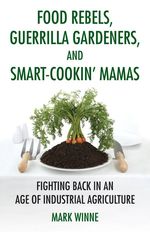
This fall I had the privilege of releasing my second book Food Rebels, Guerrilla Gardeners, and Smart-Cookin' Mamas: Fighting Back in an Age of Industrial Agriculture. As it makes the rounds of book reviews, and I tour the interview and lecture circuit – casting myself as it were to the lions of the marketplace – I have found that the book's first responders are drawn to its main title and less so to the subtitle. This is as I expected. People naturally want to hear stories about doers, real-life action heroes, and pioneers who might lead us out of the wilderness of the industrial food system. They are eager to get their hands in the dirt and less patient with the intellectual gymnastics required to deconstruct the half-truths of Big Food and its kissing cousin, Big Agriculture. The philosophical framework, so to speak, that mountaintop above the din and the thrum of the real world where many writers, including this one, love to dwell, is too often by-passed by the harried reader earnestly searching for a shortcut to the answer.
So allow me to use this space to reacquaint you, diligent reader, with the Big Idea of Food Rebels and why, in my humble opinion, it matters. I opened the book with a few lines from from Fyodor Dostoevsky's parable The Grand Inquisitor: "Today, people are persuaded more than ever that they have perfect freedom, yet they have brought their freedom to us and laid it humbly at our feet…And we alone shall feed them…Oh, never, never can they feed themselves without us! In the end they will lay their freedom at our feet, and say to us, 'Make us your slaves, but feed us.'" I spare little subtlety in drawing a parallel between this iconic passage of Western literature and the industrial food system's quest to control the hearts and minds of us, the dependent food consumer. After all, we know, as the industrial food system loves to remind us, that we are staring down the twin barrels of too many people and too little food.
Interestingly, the same lead was used in a recent review of Food Rebels by "Food Safety News." After going on for nearly three pages with an accurate, blow-by-blow account of the book's main points, the reviewer concludes with "Although Winne delivers strong arguments for the alternative food system, his book too glibly disparages the benefits of the industrial food system—namely, an inexpensive food supply, a system that can meet the growing worldwide food demand…." So, in the spirit of Auld Lang Syne, let me offer a selective retrospective of the industrial food system's sins for 2010 'less them "be forgot, and never brought to mind."
As we all get ready to sit down to Thanksgiving dinner, Mark Winne provides food for thought on the Washington Post's Political Bookworm blog and on NPR's Tell Me More.
And while we're thinking about food, hunger, and how to challenge our industrial food systems, Winne talks about how we can all be Food Rebels. Happy Thanksgiving!
In our first post, we featured Connecticut's Working Lands Alliance and the National Farm to School Network. Today we profile the Sustainable Food Center, headquartered in Austin, Texas, and the W. K. Kellogg Foundation's Food and Community Program.
The Sustainable Food Center's mission is to cultivate a healthy community in Austin, Texas, by strengthening the local food system and improving access to nutritious, affordable food. SFC envisions a food secure community where all children and adults grow, share and prepare healthy, local food. Through organic food gardening, relationships with area farmers, interactive cooking classes and nutrition education, children and adults have increased access to locally grown food and are empowered to improve the long-term health of Central Texans and our environment.
The SFC's major projects include the Grow Local program, which provides education to increase proficiency in food gardening, and aid in the establishment and long-term sustainability of community and school gardens; the Happy Kitchen, a cooking and nutrition education program; and Farm Direct, which runs the Austin Farmers Market and connects local growers with institutional consumers.
In December, the Happy Kitchen will hold a facilitator appreciation banquet at a local library. And SFC will benefit from a CharityBash fundraiser for young professionals on December 8th.
The W. K. Kellogg Foundation's Food and Community Program is focused on creating healthy places where all children thrive. The program includes efforts to improve school food, aid community-led initiatives to increase access to good food and opportunities for physical activity, and works to build movements to promote healthy eating and active living.
Among the many programs supported by the foundation is Double Up Food Bucks, a Detroit-based group which helps families receiving food assistance benefits purchase more fresh fruits and vegetables at farmers’ markets. This brings benefit to both the families and to the local farmers selling the fresh fruits and vegetables. Watch a video here or at YouTube to find out more about the program.
In his book Food Rebels, Guerrilla Gardeners, and Smart-Cookin’ Mamas: Fighting Back in an Age of Industrial Agriculture, Mark Winne introduces us to innovative "local doers" leading the charge to bring nutritious, sustainable, and affordable food to all. Heeding Emerson's call to embrace that great American virtue of self-reliance, these leaders in communities all across the country are defying the authority of the food conglomerates and taking matters into their own hands.
Today we profile two groups of "Food Rebels": the Working Lands Alliance and the National Farm to School Network.
Working Lands Alliance at their "No Farms, No Food" rally at the Connecticut State Capitol in spring 2009.
The Working Lands Alliance was formed in 1999 with the sole purpose of preserving Connecticut’s most precious natural resource – its farmland. WLA is a coalition whose supporters include more than 600 individuals and 200 businesses and organizations that include farmers, conservationists, anti-hunger groups, planners and local food enthusiasts. This coalition has joined together in an effort to halt the loss of Connecticut’s remaining farmland.
This week, the Working Lands Alliance and the CT Trustees of the Eastern States Exposition announced the winners of the 2010 Farmland Preservation Pathfinder Awards. The town of Pomfret, a community of 4,100 residents, won the Pathfinder Group Award for their preservation efforts, including a bonding resolution of $4 million for land preservation and a one-time preservation of 17 parcels totaling over 700 acres in 2009 (unprecedented in the State of Connecticut). WNPR radio host Faith Middleton is the winner of the Pathfinder Individual Award for outstanding achievement in advancing farmland preservation in the State of Connecticut. And for their determination and success in restoring an agricultural asset to their community and founding a community farm that features educational programs about farming, raises vegetables for a CSA, and makes weekly donations of product to local families in need, the Woodbridge Conservation Commission & the Board of Directors of Massaro Community Farm is the winner of the Pathfinder Education Leader Award for significant contributions in the area of educating the public about the importance of farmland preservation.
The National Farm to School Network increases access to local food and nutrition education to improve children's health, strengthen family farms, and cultivate vibrant communities. Founded in 2007, the National Farm to School Network provides training and technical assistance, information services, networking, support for policy advocacy, and media and marketing activities in all 50 states with national staff and eight Regional Lead Agencies. The National Farm to School Network envisions a nation in which Farm to School programs are an essential component of strong and just local and regional food systems, ensuring the health of all school children, farms, environment, economy and communities.
Photo by Emily Hart Roth
In May 2010, the White House Childhood Obesity Taskforce Report recommended both Farm to School and school gardens as a community based solution to childhood obesity. Specifically, recommendation 3.6 of this report states: "USDA should work to connect school meal programs to local growers and use farm to school programs, where possible, to incorporate fresher, appealing food in school meals." Michelle Obama’s Let's Move campaign website also specifically promotes community gardens, school gardens and Farm to School programs.
Farm to School is involved with Root 4 Kids, a campaign from Annie’s that calls on parents and teachers nationwide to help one million kids dig and plant new veggies harvest 2010 through harvest 2011. Annie’s will award the school with the most people who join Root 4 Kids by December 31, 2010, with their choice of a garden, a new Farm to School program or gardening supplies for one year. In addition, for every 1,000 people who join, Annie’s will contribute funds toward a garden or Farm to School program in an underprivileged school.
The struggle between human freedom and authority is eternal and universal. With the advent of industrialism and its widespread application to our food supply (through factory farms, genetic engineering, and reliance on chemicals), that struggle has reached its latest stand-off. Will corporations fear-mongering about the lack of an adequate food supply and their promise of abundance prevail, or will we rise to the challenge of pursuing self-reliance and democratic control of our food system?
While the framing of Winne’s argument draws from great thinkers like Dostoevsky and Emerson, it also moves from philosophy to action, with the stories of myriad “local doers” leading the charge. Covering everything from urban farming in Cleveland, and buffalo restoration on Native American reservations, to food-education classes in diabetes-prone neighborhoods, Winne shows how people are reclaiming their connection to their food and their health. It’s hope is that these types of efforts, scaled up and adopted more widely, will allow the alternative food system to dethrone the industrial.
Food Rebels, Guerilla Gardeners, and Smart-Cookin’ Mamas challenges us to go beyond eating local to become part of a larger solution, demanding a system that sustains body and soul.
For twenty-five years Mark Winne was the executive director of the Hartford Food System in Hartford, Connecticut. He speaks and consults extensively on community food-system topics and is the author of Closing the Food Gap. Winne lives in Santa Fe, New Mexico.
Picture this: three long-haired college kids are unloading crates of food from the bed of a battered pick-up truck. It's parked curbside at the Androscoggin Food Co-op located in the equally battered mill town of Lewiston, Maine. The year is 1971 and these kids are, unbeknownst to them, the vanguard of the local food movement.
They've spent the day rounding up goods directly from local farms and food processors, not because they're devout locavores (the word wouldn't be invented for another 35 years) but because sourcing locally was the cheapest way to get food for a co-op whose members were largely lower income. Some crates are full of apples from a nearby orchard; others contain 12-pound wheels of a so-so cheddar from a small cheese plant; and one cardboard box contains 30 dozen eggs from a chicken farm only 10 miles down the road. That box is labeled DeCoster Farms.
Yes, the product of this family egg farm (now headquartered in Iowa) at the eye of the current salmonella storm was being handled contentedly by these prehistoric foodies, I among them. As a company that was started with 125 hens in the mid-1960s by Austin "Jack" DeCoster in the farm town of Turner (pronounced "Turna" by everybody except out-of-state college kids), it was as local as you could get.
Funny how times change. Jack, now 71, was an ambitious man who wasn't going to be happy selling locally produced eggs just in northern New England. According to one DeCoster employee, Jack is a born-again Christian who doesn't engage in any leisure pursuits other than work, which he apparently pursues 18-hours a day. With a work ethic like that, growth was inevitable. Now operating under the names of Wright County Egg and Quality Egg, Jack's egg empire now produces 2.3 million dozen eggs a week in Iowa while his "starter" farm back in Turner, renamed Maine Contract Farming, keeps 3.5 million hens gainfully employed.
Today's post is from David Chura, author ofI Don't Wish Nobody to Have a Life Like Mine: Tales of Kids in Adult Lockup. Chura has worked with at-risk teenagers for forty years. His writing has appeared in the New York Times and multiple literary journals and anthologies. He is a frequent lecturer and advisor on incarcerated youth.
It costs a lot to lock people up (by some estimates $32 billion annually). You have to house them, feed them, give them basic medical care.
It costs a lot, even if you cut corners. Overpack a dorm or double-bunk (as dangerous as that practice is). Serve cheap food—unrecognizable, processed meats; overripe, almost rotted fruit; white bread that wads up to the touch. Save on health care by not giving any. In the county jail where I taught high school for ten years I'd seen young guys with cheeks ballooned out from abscessed molars told to wait two weeks for the next dentist visit; or students go without their essential medications because they supposedly filled out the wrong forms which would eventually get "lost" anyway in the great paper-shredder of jailhouse bureaucracy. One male warden on the women's unit even decided to save money by rationing toilet paper and tampons.
Today, some states such as Virginia, Utah, Missouri, Arizona, New York, New Jersey and Iowa have a new, more direct approach: charge locked up men and women fees for room and board.
Beacon Broadside, a project of Beacon Press, is an online venue for essays, news items, and dispatches from respected writers, thinkers, and activists about our times.